

In today’s digital landscape, mental health support has become more essential than ever. While traditional therapy and counseling remain gold standards, barriers such as cost, stigma, and limited availability can prevent many individuals from seeking help. This year (2026), innovative solutions like mental health chatbots are emerging as valuable complements to professional care. By harnessing advances in artificial intelligence and natural language processing, these virtual guides offer users self-help exercises, mood tracking, coping strategies, and empathetic conversation at any hour.
Across universities, workplaces, and community clinics, organizations are piloting these conversational agents to expand access and reduce waiting times. For those hesitant to disclose sensitive feelings to a human, chatbots deliver an anonymous space to explore emotions and develop resilience. Although these tools cannot replace licensed therapists, they provide an affordable and scalable option for early intervention, crisis management, and ongoing self-care.
In this comprehensive overview, we will examine how mental health chatbots operate, explore their advantages and limitations, and outline critical ethical and regulatory considerations. We will then present evidence-based best practices for designing or selecting an effective solution. By understanding these key areas, readers can integrate this technology responsibly and maximize its benefits while safeguarding user well-being and data privacy.
What Are Mental Health Chatbots?
Mental health chatbots are software programs that leverage natural language processing (NLP) and machine learning algorithms to engage users in supportive dialogue. They often follow structured frameworks drawn from cognitive behavioral therapy (CBT), dialectical behavior therapy (DBT), mindfulness, or positive psychology. By analyzing text input, these chatbots can detect emotional cues, gauge sentiment, and deliver tailored interventions such as breathing exercises, cognitive reframing, or daily check-ins.
At their core, mental health chatbots combine four main technologies: NLP engines to interpret user messages, sentiment analysis to assess mood, dialog management systems to map conversation flows, and secure data storage to track progress. Interactive elements might include mood journaling, guided meditation sessions, goal setting, and personalized affirmations. Some platforms also integrate multimedia content such as audio recordings, videos, or infographics to enrich the user experience.
Popular examples of mental health chatbots in today’s market include Woebot, Wysa, and Tess. Each employs unique approaches: Woebot uses CBT-based prompts and emojis for engagement; Wysa emphasizes a warm, conversational tone with crisis escalation; Tess offers multi-language support for diverse audiences. While these chatbots vary in design, they share the objective of delivering accessible mental health education and self-care tools without requiring human staff on standby.
In summary, mental health chatbots act as first-line digital companions that empower users to identify stressors, build coping skills, and track emotional patterns over time. By providing timely reminders, interactive exercises, and neutral feedback, they foster self-awareness and encourage proactive steps toward well-being.
Key Benefits of Mental Health Chatbots
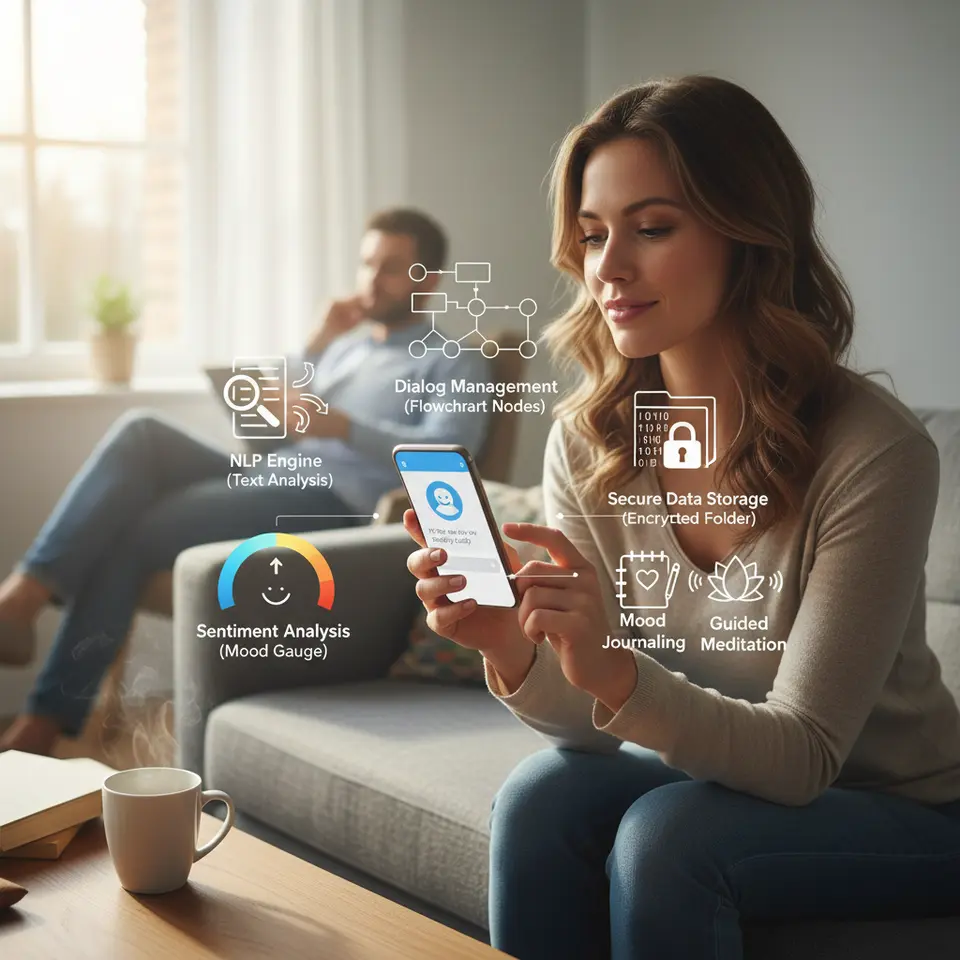
One of the most compelling advantages of mental health chatbots is their accessibility. Available 24/7 via web browsers, mobile apps, or messaging platforms, these tools offer immediate support regardless of location or time zone. For individuals living in remote areas or with mobility issues, chatbots remove logistical hurdles that often delay care.
Another significant benefit is anonymity. Users may feel more comfortable disclosing sensitive thoughts and emotions to an AI than to a human professional. This anonymity can reduce perceived stigma and foster honesty, which in turn enhances the quality of self-reported data and tailored interventions.
From an organizational perspective, deploying chatbots is highly cost-effective. Once developed and tested, virtual agents can engage thousands of users simultaneously without incurring additional personnel costs. This scalability makes mental health support feasible for workplaces, educational institutions, and healthcare systems facing budget constraints.
Consistency and personalization go hand in hand in AI-driven care. Chatbots deliver standardized therapeutic exercises drawn from evidence-based guidelines while adapting the dialogue flow based on individual responses, usage patterns, and progress metrics. Over time, these platforms can refine recommendations by leveraging aggregated, anonymized data to identify which strategies yield the best outcomes for specific user segments.
Finally, aggregated usage statistics from mental health chatbots can provide valuable insights to researchers and policymakers. By analyzing trends in mood shifts, common stressors, or peak usage times, stakeholders can better allocate resources, develop targeted public health campaigns, and refine digital mental health strategies.
Potential Risks, Limitations, and Ethical Considerations
Despite their promise, mental health chatbots are not without challenges. A primary concern is the lack of genuine human empathy. While sophisticated NLP models can approximate compassionate responses, they may struggle to convey nuanced understanding in complex emotional situations, leaving users feeling misunderstood or frustrated.
Clinical accuracy is another critical consideration. Without rigorous validation and ongoing oversight by qualified professionals, chatbots might inadvertently provide advice that is generic, outdated, or even harmful. Ensuring that content aligns with accepted clinical guidelines requires substantial involvement from psychologists, psychiatrists, and other mental health experts.
Privacy and data security also present potential vulnerabilities. Mental health data is highly sensitive, and breaches can have severe personal and legal consequences. Developers must employ end-to-end encryption, secure data storage practices, and transparent consent mechanisms to protect user information and build trust.
Overreliance on AI-driven support is a related risk. Some users may delay seeking professional treatment, incorrectly assuming that a chatbot alone is sufficient to manage severe conditions or crisis situations. To mitigate this, platforms should include clear disclaimers and crisis escalation protocols.
Lastly, bias and fairness are important limitations to address. If training datasets lack diversity, chatbots may produce culturally insensitive responses or fail to recognize specific dialects and idioms. These biases can undermine the inclusivity and effectiveness of the service.
Deploying mental health chatbots responsibly requires navigating complex ethical and legal frameworks. First, obtaining informed consent is crucial. Users must understand the chatbot’s capabilities, limitations, data usage policies, and any automated decision-making processes before engaging. Clear terms of service and privacy notices help ensure transparency.
Compliance with data protection laws such as GDPR in Europe or HIPAA in the United States is mandatory when handling protected health information. Adhering to these regulations involves implementing secure data storage, regular audits, and protocols for breach notification.
Developers should also publish information about model training datasets, update schedules, and retention periods to build user trust. Open communication about the chatbot’s decision-making process can foster accountability and reduce misunderstandings.
Another key element is crisis escalation. Ethical chatbots must be capable of detecting high-risk signals—such as suicidal ideation or self-harm—through keyword spotting and sentiment analysis. Upon identifying such cues, the system should instantly refer users to qualified professionals or emergency resources like the Suicide and Crisis Lifeline.
Collaboration with mental health institutions ensures that ethical guidelines evolve alongside technological advancements. Organizations such as the National Institute of Mental Health and the American Psychological Association provide valuable frameworks and research findings that inform policy development and best practices.
Best Practices for Designing Effective Mental Health Chatbots

To maximize benefits and minimize risks, follow these evidence-based practices when designing or selecting a mental health chatbot solution:
- Collaborate with Experts: Engage licensed psychologists, therapists, and psychiatrists in content creation, review cycles, and pilot testing to validate therapeutic accuracy.
- Adopt Proven Frameworks: Base conversational flows on CBT, DBT, mindfulness, or other peer-reviewed methodologies that have demonstrated efficacy in clinical settings.
- Ensure Data Privacy: Implement end-to-end encryption, anonymize user records, and provide granular privacy controls so individuals can manage how their data is used and shared.
- Implement Human-in-the-Loop: Establish seamless handoff protocols that connect users to human counselors when complex issues or emergencies arise.
- Conduct Rigorous Testing: Perform usability studies, A/B tests, and continuous monitoring for unintended or harmful outputs. Gather quantitative metrics and qualitative feedback to drive improvements.
- Foster Cultural Sensitivity: Train language models on diverse datasets and localize content—metaphors, examples, and resources—to resonate with target populations.
- Iterate Based on Feedback: Collect in-app ratings, user testimonials, and clinical outcome measures to refine conversational scripts and intervention techniques over time.
- Provide Clear Disclaimers: Inform users that chatbots are not substitutes for professional care and encourage them to seek expert help when needed.
Frequently Asked Questions
What can mental health chatbots help me with?
Mental health chatbots offer tools such as mood journaling, guided breathing exercises, cognitive reframing prompts, and daily check-ins. They aim to support self-awareness and teach coping strategies based on evidence-based therapies like CBT and mindfulness.
Are chatbots a replacement for therapy?
No. Chatbots serve as complements to professional care, offering scalable and accessible support. They are not a substitute for licensed therapists and should include crisis escalation protocols and clear disclaimers.
How is my data kept private?
Responsible platforms implement end-to-end encryption, secure data storage, anonymization of records, and transparent consent mechanisms. Users should review privacy policies and select solutions compliant with regulations like GDPR or HIPAA.
Can chatbots handle emergencies?
Advanced chatbots use sentiment analysis and keyword spotting to detect high-risk signals (e.g., suicidal ideation). When such cues arise, they provide immediate referrals to emergency resources or connect users with human counselors.
Conclusion
As demand for accessible mental health support continues to rise, mental health chatbots offer a promising avenue to deliver scalable, cost-effective care. In today’s environment, these AI-driven agents can bridge gaps in service delivery by providing real-time interventions, fostering self-awareness, and guiding users through evidence-based exercises. However, their successful deployment hinges on ethical design, robust data protection, rigorous clinical oversight, and clear crisis escalation pathways.
By collaborating with mental health professionals, adhering to regulatory requirements, and continuously iterating based on user feedback, developers and organizations can harness the potential of mental health chatbots while safeguarding the well-being of those who rely on them. In doing so, we pave the way for a more inclusive, stigma-free approach to mental health care in today’s digital age.





Event Management Chatbots: Streamline Attendee Engagement
Ethical AI Chatbots: Ensuring Fairness & Transparency
Mental Health Chatbots: Benefits, Risks & Best Practices
Boost Chatbot IQ with Retrieval-Augmented Generation (RAG)