
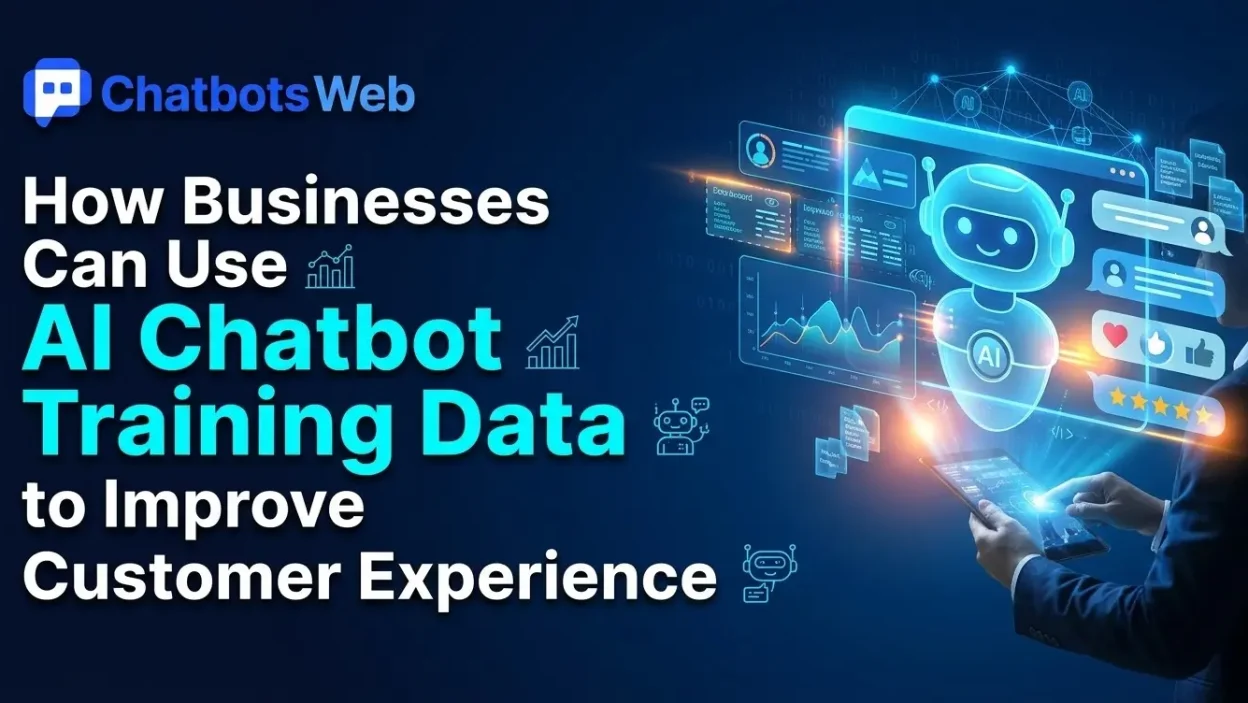
Customer experience has become an important factor in business success. Customers expect quick responses, accurate information, and personalized support whenever they interact with a company. Traditional customer service methods often struggle to meet these expectations, especially when businesses receive large volumes of inquiries. This is where AI chatbot training data becomes valuable.
AI chatbot training data helps conversational systems understand customer questions, recognize different communication patterns, and generate relevant responses. By training chatbots with accurate and diverse information, businesses can improve response quality, reduce communication delays, and provide more consistent customer support.
Modern businesses can also use training data to support AI chatbot personalization, strengthen Conversational marketing, and improve Live chat automation. These capabilities allow companies to understand customer needs and deliver more relevant experiences across digital communication channels.
Understanding the Importance of AI Chatbot Training Data
AI chatbot training data refers to the information used to teach artificial intelligence systems how to understand language, interpret questions, and generate appropriate responses. This information can include customer conversations, frequently asked questions, product descriptions, support documents, and other relevant business information.
The quality of this information directly influences how effectively a chatbot communicates with customers. Well-organized training data helps chatbots recognize customer intentions and provide useful answers in different situations.
How Training Data Improves Chatbot Understanding
AI chatbots use training examples to identify language patterns, recognize keywords, and understand the context of customer questions. For example, customers may ask about delivery using different expressions, such as asking when an order will arrive or how long shipping takes.
A chatbot trained with diverse examples can recognize that these questions have similar meanings. This improves its ability to understand natural conversations instead of depending entirely on exact keywords.
Why Data Accuracy Matters
Accurate training information helps chatbots provide reliable answers about products, services, policies, and business operations. Incorrect or outdated information can lead to misleading responses and customer frustration.
Businesses should regularly review their training materials to ensure that chatbot responses reflect current information. This process helps maintain communication quality and builds customer confidence.
Collecting Relevant Data for Better Customer Interactions

Useful training data should represent real customer needs, common communication patterns, and different support situations. Companies can gather this information from existing customer service interactions and approved business resources.
Using Customer Conversations as Training Examples
Previous customer conversations provide valuable insights into customer expectations. Support messages, chat transcripts, and frequently repeated inquiries can help businesses identify common questions and develop suitable training examples.
For instance, an ecommerce company may discover that customers frequently ask about product availability, payment options, shipping costs, and return policies. These questions can be organized into training categories to improve chatbot understanding.
Before using customer conversations, businesses should remove unnecessary personal information and ensure that data collection follows applicable privacy requirements.
Incorporating Frequently Asked Questions
Frequently asked questions provide a practical foundation for chatbot training. Businesses can use existing FAQ pages, help center articles, product documentation, and customer support guides to prepare relevant information.
Organizing these resources into clear categories makes it easier for chatbots to retrieve appropriate answers. It also reduces the likelihood of inconsistent responses across different customer interactions.
Improving AI Chatbot Personalization
Personalized communication helps businesses create more relevant customer experiences. Customers appreciate interactions that reflect their preferences, previous inquiries, and specific requirements.
Training data can support personalized conversations by helping AI systems understand different customer situations and respond appropriately. Businesses should combine relevant training information with authorized customer context to deliver useful interactions.
Creating Personalized Customer Responses
AI chatbot personalization allows businesses to provide responses that match individual customer needs. For example, a chatbot serving an online store can guide customers toward relevant product categories based on their stated interests.
A well-designed chatbot can also adjust its communication style depending on the situation. It may provide detailed explanations when customers need technical assistance and shorter answers when they ask simple questions.
Personalization should remain transparent and respect customer privacy. Businesses should avoid collecting unnecessary personal information or making assumptions about customers without reliable evidence.
Understanding Customer Intent and Preferences
Customer intent recognition helps chatbots identify what users want to accomplish during conversations. A customer asking about delivery, for example, may need order tracking rather than a general explanation of shipping services.
Training data containing different question structures and realistic conversation examples can improve intent recognition. As a result, chatbots can direct customers toward relevant information with fewer unnecessary interactions.
Supporting Conversational Marketing Through AI Chatbots

Guiding Customers Through the Buying Journey
Businesses can train chatbots to support customers during different stages of the purchasing process. A visitor researching products may need recommendations, while someone preparing to purchase may ask about payment methods or delivery options.
Relevant training information helps chatbots provide suitable guidance at each stage. This creates a smoother experience and reduces the effort customers need to spend searching for information.
Improving Conversational Marketing Strategies
Conversational marketing becomes more effective when chatbots understand customer questions and respond with relevant information. Businesses can use chatbot conversations to explain product features, introduce services, answer common objections, and guide visitors toward appropriate next steps.
For example, a software company can train its chatbot to explain subscription plans and help visitors identify suitable solutions. When a question requires specialized assistance, the chatbot can connect the customer with a human representative. This combination of automation and personal support creates more useful customer interactions.
Enhancing Customer Support With Live Chat Automation
Customer support teams often receive numerous inquiries about similar issues. Managing these requests manually can increase response times and create operational challenges.
AI chatbot training data helps businesses automate common support interactions by teaching chatbots how to recognize questions and provide relevant information. This allows human representatives to focus on complex customer concerns.
Automating Common Customer Inquiries
Live chat automation allows businesses to handle repetitive customer questions through automated conversations. A trained chatbot can provide information about business hours, order status, account access, payment procedures, and service availability.
For example, customers visiting an ecommerce website may want to know whether an order has been shipped. A chatbot connected to an authorized order management system can retrieve relevant information and communicate the status. The accuracy of these responses depends on both quality training information and reliable connections to business systems.
Providing Consistent Customer Assistance
Consistency is important when customers interact with businesses through different channels. Chatbots trained with approved support documentation can provide standardized information about company policies, product details, and service procedures. This reduces the possibility of receiving conflicting answers to similar questions.
However, automated systems should recognize their limitations. When a question is complicated, sensitive, or outside the chatbot’s knowledge, transferring the conversation to a human representative is essential.
Training Chatbots With Industry-Specific Information
Different industries have different customer expectations, communication requirements, and service processes. A chatbot designed for an online retailer may not be suitable for a healthcare provider, financial company, or software business. Industry-specific training data helps chatbots understand relevant terminology, common customer concerns, and business processes.
Developing Relevant Industry Knowledge
Businesses should prepare training materials that reflect their products, services, and industry requirements. A real estate company, for example, may train its chatbot using property descriptions, location information, pricing details, and viewing procedures.
Similarly, a software company may use technical documentation, troubleshooting guides, and product specifications to improve customer assistance. Relevant industry information allows chatbots to provide more focused answers and reduces confusion during customer interactions.
Adapting to Different Customer Requirements
Customer expectations can vary depending on the industry and the complexity of a service. Some customers need simple explanations, while others require detailed technical guidance.
Businesses should include different question types and communication scenarios in their training datasets. This helps chatbots respond appropriately to customers with different levels of knowledge and experience.
Maintaining Data Quality and Customer Privacy

Removing Incorrect and Outdated Information
Outdated training materials can cause chatbots to provide incorrect product details, pricing information, or company policies. Businesses should regularly review their knowledge sources and remove information that no longer reflects current operations.
A structured review process also helps identify duplicate entries, incomplete answers, and contradictory information. Maintaining updated information improves the reliability of chatbot responses and creates a more consistent customer experience.
Protecting Customer Information
Customer privacy should remain a priority throughout chatbot development. Businesses must handle personal information responsibly and follow applicable data protection requirements.
Training datasets should be reviewed to remove unnecessary sensitive information. Companies should also apply appropriate access controls, security measures, and data retention practices.
Responsible data management helps protect customers while supporting the development of trustworthy AI communication systems.
Measuring AI Chatbot Performance and Customer Satisfaction
Measuring chatbot performance helps businesses understand whether their training data is improving customer interactions. Companies should evaluate both technical performance and the quality of the customer experience.
Regular performance analysis can reveal knowledge gaps, communication problems, and opportunities to improve training materials.
Monitoring Response Accuracy and Resolution Rates
Businesses can review how frequently chatbots provide correct answers and successfully resolve customer inquiries without human assistance.
Response accuracy indicates whether the chatbot understands questions and retrieves relevant information. Resolution rates help determine whether customers can complete their tasks through automated support.
Companies should also monitor unsuccessful conversations to identify areas where additional training examples or better information sources are needed.
Evaluating Customer Feedback
Customer feedback provides direct insights into chatbot performance. Businesses can collect feedback through satisfaction surveys, conversation ratings, and customer support reviews.
Analyzing this information helps companies identify confusing responses, repeated problems, and situations where customers prefer human assistance. Combining customer feedback with performance data creates a practical foundation for continuous chatbot improvement.
Overcoming Common AI Chatbot Training Challenges
Developing effective chatbot training data can involve several challenges. Businesses may struggle with incomplete information, limited conversation examples, changing customer expectations, and complex language patterns.
Addressing these problems requires careful planning and regular evaluation. Companies should avoid assuming that larger datasets automatically produce better chatbot performance.
Managing Limited or Unbalanced Training Data
A dataset containing only a small number of common questions may prevent chatbots from understanding less frequent customer requests.
Businesses should expand their training examples to include different expressions, question structures, and customer scenarios. This helps improve the chatbot’s ability to recognize variations in natural language.
Reducing Incorrect or Irrelevant Responses
Chatbots may generate unsuitable responses when their training information is incomplete, contradictory, or unrelated to the question.
Businesses should use approved knowledge sources, establish clear response boundaries, and test chatbot performance before deployment. They should also create fallback responses that explain when the chatbot cannot provide a reliable answer. This prevents the system from presenting uncertain information as fact.
Building a Long-Term AI Chatbot Training Strategy
An effective chatbot training strategy should be treated as an ongoing business process rather than a one-time development activity. Customer expectations, product information, and business policies change over time, making regular training updates necessary.
Businesses should establish a process for reviewing chatbot conversations, identifying unanswered questions, updating knowledge sources, and evaluating response quality. These activities help ensure that automated support remains relevant as the organization grows.
Companies should also involve customer service teams in the improvement process because their experience can reveal recurring customer problems and communication gaps. Testing new training examples before deployment helps businesses identify potential errors and maintain consistent service quality. By combining accurate information, responsible data practices, and continuous evaluation, organizations can develop chatbots that support long-term customer relationships.
Conclusion
AI chatbot training data plays an important role in improving customer experience by helping businesses deliver accurate, relevant, and consistent communication. From understanding customer intent to supporting personalized interactions and automated customer service, quality training information can make chatbots more useful across different business operations. Businesses can achieve better results by collecting relevant information, maintaining accurate knowledge sources, protecting customer privacy, and regularly evaluating chatbot performance.
By combining AI chatbot personalization, Conversational marketing, and Live chat automation, companies can create more efficient communication experiences while maintaining meaningful customer relationships. Investing in a structured chatbot training strategy can ultimately improve customer satisfaction and support sustainable business growth.
Frequently Asked Questions (FAQs)
1. What is AI chatbot training data?
AI chatbot training data is the information used to teach chatbots how to understand customer questions, recognize language patterns, and generate relevant responses. It can include conversations, FAQs, product information, and support documentation.
2. Why is AI chatbot training data important for businesses?
It helps businesses improve chatbot accuracy, understand customer intent, automate repetitive inquiries, and provide consistent customer support. Quality training data also contributes to better customer experiences.
3. What types of data are used to train AI chatbots?
Common data sources include customer conversations, frequently asked questions, product descriptions, support documents, troubleshooting guides, and approved knowledge bases.
4. How does AI chatbot training data improve personalization?
It helps chatbots understand different customer needs and communication patterns. When combined with authorized customer context, this information allows businesses to deliver more relevant and personalized responses.
5. Can AI chatbot training data improve customer service?
Yes. It helps chatbots answer common questions, provide accurate information, and guide customers through routine support processes. This can reduce response delays and improve service availability.
6. What is the role of conversational marketing in AI chatbots?
Conversational marketing uses interactive communication to engage potential customers. AI chatbots support this strategy by answering questions, explaining services, and guiding users through purchasing decisions.
7. How does live chat automation benefit businesses?
Live chat automation helps businesses handle repetitive inquiries, provide faster responses, and reduce manual workloads. It also allows customer service teams to focus on more complicated issues.
8. How often should businesses update chatbot training data?
Businesses should review training information regularly and update it whenever products, services, policies, or customer requirements change. Performance monitoring can also identify when additional training is necessary.
9. How can businesses ensure AI chatbot training data quality?
Businesses can maintain data quality by using reliable sources, removing duplicate information, correcting outdated content, testing chatbot responses, and reviewing customer feedback.
10. Can AI chatbots completely replace human customer support?
No. AI chatbots can manage many routine interactions, but complex complaints, sensitive requests, and situations requiring human judgment still need human representatives. A combination of automation and human support generally provides a better customer experience.



How Businesses Can Use AI Chatbot Training Data to Improve Customer Experience
How Multilingual AI Chatbots Help Businesses Reach Global Audiences
How Enterprise Chatbot Solutions Improve Business Efficiency
How AI Chatbot Implementation Improves Customer Support