

Conversational marketing has become an important approach for modern brands that want to create more direct and meaningful interactions with their customers. Instead of depending only on traditional campaigns, businesses can communicate with audiences through live chat, messaging platforms, chatbots, and other digital channels.
Customers increasingly expect fast answers, relevant information, and convenient communication. When businesses make it easy for customers to ask questions and receive useful responses, the overall digital experience can become more responsive and engaging.
What Is Conversational Marketing?
Conversational marketing is a customer-focused marketing approach that uses real-time or near-real-time conversations to engage audiences, answer questions, understand needs, and guide customers through their journey.
These conversations can happen through websites, social media messaging, mobile applications, messaging platforms, or other digital channels.
Creating Two-Way Communication
Traditional marketing often sends messages from a brand to an audience. Conversational marketing creates opportunities for customers to respond, ask questions, provide information, and receive relevant answers.
This two-way communication can help businesses understand customer needs while making interactions feel more direct and accessible.
Supporting the Customer Journey
Conversations can happen at different stages of the customer journey. A visitor may ask a basic question before becoming a lead, request product information before purchasing, or need support after a transaction. A well-designed conversational strategy can provide relevant assistance at each stage.
Why Conversational Marketing Matters for Modern Brands

Faster Customer Responses
Customers often expect quick answers when they have questions about products, services, pricing, availability, or processes. Slow responses can create unnecessary friction.
Automated and live conversational tools can help businesses provide faster initial responses while directing more complex questions to human representatives.
More Personalized Interactions
Conversations can provide businesses with useful information about customer needs. Instead of presenting identical information to every visitor, brands can adapt conversations based on customer questions and preferences. Personalized communication can make the customer experience more relevant and useful.
Using Live Chat Automation Effectively
Live chat automation can help businesses manage repetitive questions and provide immediate responses when human agents are unavailable. It can be particularly useful for common questions about products, services, business hours, processes, or basic support. However, automation should support the customer experience rather than create additional barriers.
Automating Common Questions
Businesses can identify frequently asked questions from customer support records, website interactions, and previous conversations. These questions can become automated responses within a live chat system.
Providing immediate answers to common questions can reduce waiting time and allow human representatives to focus on more complex conversations.
Offering a Human Handoff
Customers should have an easy way to connect with a human when automation cannot provide a suitable answer.
A smooth handoff can prevent frustration and ensure that complex issues receive appropriate attention. The transition should preserve relevant conversation context whenever possible.
Implementing Chatbot Automation
Chatbot automation allows businesses to handle certain conversations automatically through predefined workflows or intelligent systems. Chatbots can welcome visitors, answer frequently asked questions, collect information, qualify leads, and guide customers toward relevant resources. The effectiveness of chatbot automation depends heavily on how the conversation is designed.
Creating Clear Conversation Flows
A chatbot should guide users through simple and understandable steps. Long or confusing conversation flows can make it difficult for customers to find the information they need.
Businesses should organize chatbot journeys around common customer goals and provide clear options at important points in the conversation.
Knowing When to Escalate
Not every conversation should be automated. Complex complaints, sensitive support issues, unusual requests, and situations requiring judgment may need human assistance.
A good chatbot should recognize when a conversation falls outside its capabilities and provide an appropriate escalation path.
The Role of Conversational AI
Conversational AI can make digital conversations more flexible by using artificial intelligence to understand customer messages and generate relevant responses.
Unlike strictly rule-based systems, AI-powered conversational tools can process natural language and respond to a broader range of customer questions.
Understanding Customer Intent
Conversational AI can analyze the meaning behind customer messages rather than relying only on specific keywords. This can help businesses handle variations in how customers ask similar questions.
For example, customers may phrase the same request in several different ways. An intelligent system can potentially recognize the common intent behind those messages.
Improving Responses Over Time
Businesses can review conversation data to identify unanswered questions, common misunderstandings, and areas where responses need improvement. Regular optimization can make automated conversations more useful and aligned with actual customer needs.
Best Practices for Better Conversational Marketing
A successful conversational strategy requires more than technology. Businesses should focus on the quality, relevance, timing, and purpose of each interaction. The following practices can help brands create more effective conversations across digital channels.
Start With Customer Needs
Businesses should identify why customers are starting conversations. Common reasons may include product questions, pricing inquiries, support requests, recommendations, or information searches.
Understanding these needs allows businesses to design conversations around actual customer goals instead of forcing customers through unnecessary promotional steps.
Keep Conversations Simple
Customers should not need to navigate complicated conversation flows to receive basic information. Clear questions, concise responses, and understandable choices can make digital interactions easier. Businesses should remove unnecessary steps and provide direct paths toward common customer objectives.
Provide Useful Information
Every conversational interaction should provide value. This might involve answering a question, recommending a relevant resource, explaining a process, or connecting the customer with the appropriate team. Promotional messages should be used carefully so that conversations do not become repetitive sales pitches.
Personalizing Conversational Experiences

Using Context in Conversations
A conversational system can provide more relevant responses when it understands the context of the interaction. For example, a customer asking about an existing order may need a different response from a visitor asking about a product for the first time. Context helps businesses avoid repeating questions and can create a smoother experience.
Recommending Relevant Solutions
Conversational tools can help customers discover products, services, content, or resources based on their stated needs.
Recommendations should be relevant to the customer’s request rather than simply designed to increase promotional exposure.
Integrating Conversational Marketing Across Channels
Customers may communicate with businesses through websites, social media, messaging applications, email, and other channels. A disconnected experience can make customers repeat information multiple times. A coordinated conversational strategy can create a more consistent customer journey.
Website Conversations
Website chat can help visitors find information while they are actively exploring a product or service. Businesses can use chat to answer questions, guide visitors, and connect interested prospects with sales representatives.
Social Messaging
Social media messaging can provide another opportunity for direct customer interaction. Businesses can respond to questions, provide information, address concerns, and guide customers toward relevant resources. Consistent communication across channels can help create a more connected brand experience.
Using Conversational Marketing for Lead Generation
Conversational marketing can support lead generation by engaging visitors at the moment they show interest. Instead of asking customers to complete lengthy forms immediately, businesses can use conversations to understand their needs.
Qualifying Potential Leads
Conversational tools can ask relevant questions about customer requirements, budget, interests, or business needs. Based on responses, businesses can identify which prospects require immediate human follow-up. This can help sales teams focus their attention on conversations that match their defined qualification criteria.
Making Lead Capture More Natural
Traditional forms can sometimes create friction because they require visitors to complete several fields at once. Conversational lead capture can collect information progressively through a natural interaction.
The approach should remain concise and transparent so customers understand why information is being requested.
Measuring Conversational Marketing Performance
Businesses should measure conversational activities to understand whether their strategy is achieving its intended objectives. The right metrics depend on whether the primary goal is engagement, support, lead generation, sales assistance, or customer retention.
Tracking Engagement Metrics
Businesses can monitor conversation starts, response rates, interaction duration, frequently asked questions, and completion rates.
These metrics can reveal which conversational experiences attract customer attention and where users may abandon the interaction.
Measuring Business Outcomes
Engagement metrics alone may not explain the full value of conversational marketing. Businesses can also monitor qualified leads, conversions, customer satisfaction, support resolution, and other relevant outcomes. Comparing these metrics over time can help identify opportunities for improvement.
Common Conversational Marketing Mistakes
Poorly designed conversational experiences can create frustration instead of improving customer relationships. Businesses should understand common mistakes before expanding their automation strategy.
Over-Automating Customer Interactions
Automation can improve efficiency, but not every customer interaction should be automated. Some customers need empathy, detailed explanations, or human judgment.
Businesses should identify which conversations are suitable for automation and which require human involvement.
Making Conversations Too Promotional
Customers often begin conversations because they need information or assistance. If every interaction immediately becomes a sales pitch, customers may lose trust in the experience. Brands should focus on solving customer needs first and introducing relevant commercial opportunities naturally.
Building a Long-Term Conversational Marketing Strategy
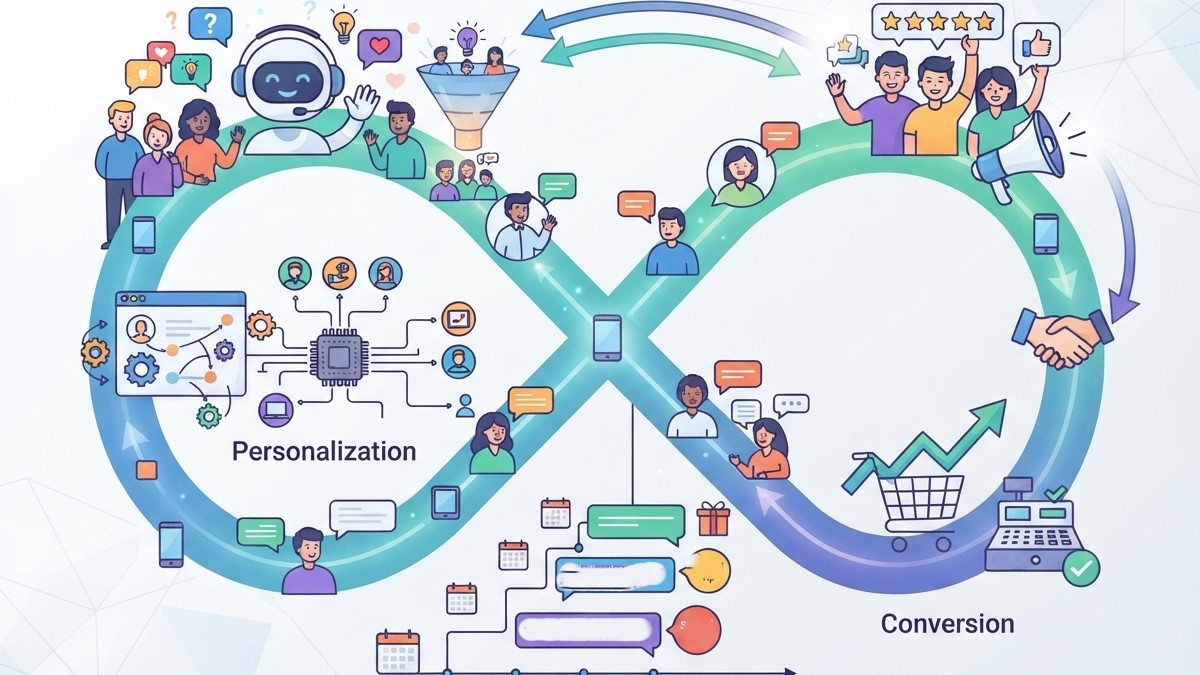
A strong strategy combines automation with human communication. Live chat automation can handle repetitive interactions, Chatbot automation can support structured customer journeys, and Conversational AI can help manage more flexible natural-language conversations. When these technologies are combined with clear goals, useful content, personalization, and appropriate human support, brands can create more responsive digital experiences.
Conclusion
Conversational marketing gives modern brands an opportunity to communicate with customers in a more direct, responsive, and personalized way. Instead of relying entirely on one-way promotional communication, businesses can create conversations that help customers find information, solve problems, and make informed decisions.
Live chat automation can improve response speed, while Chatbot automation can handle repetitive tasks and guide customers through defined journeys. Conversational AI can further expand the ability of digital systems to understand and respond to natural-language questions.
FAQs
1. What is conversational marketing?
Conversational marketing is a marketing approach that uses direct conversations to engage customers, answer questions, understand needs, generate leads, and support the customer journey through digital channels.
2. How does conversational marketing improve customer engagement?
It gives customers convenient opportunities to ask questions and receive relevant responses. Faster communication and personalized interactions can make digital experiences more accessible and useful.
3. What is Live chat automation?
Live chat automation uses automated responses and workflows to handle common customer questions or initial interactions. It can provide immediate assistance while allowing human agents to manage more complex conversations.
4. What is Chatbot automation?
Chatbot automation uses automated chatbot workflows to communicate with customers. It can answer frequently asked questions, collect information, qualify leads, provide resources, and guide users through predefined journeys.
5. What is Conversational AI?
Conversational AI uses artificial intelligence and natural-language technologies to understand customer messages and provide relevant responses. It can support more flexible interactions than basic rule-based chatbots.
6. Can conversational marketing generate leads?
Yes. Businesses can use conversational experiences to engage interested visitors, understand their requirements, collect relevant information, and identify potential leads for sales follow-up.
7. Should every customer conversation be automated?
No. Automation is useful for repetitive and predictable interactions, while complex, sensitive, or highly specific situations may require human support.
8. How can businesses personalize conversational marketing?
Businesses can use appropriate customer context, previous interactions, stated preferences, and current needs to provide more relevant responses, recommendations, and resources.
9. How can conversational marketing performance be measured?
Businesses can track conversation starts, response rates, completion rates, qualified leads, conversions, customer satisfaction, support resolution, and other metrics related to their specific objectives.
10. What is the most important conversational marketing best practice?
A key practice is to design conversations around genuine customer needs. Businesses should make interactions simple, provide useful information, offer human support when necessary, an






How Customer Support Automation Reduces Support Workload
Conversational Marketing Best Practices for Modern Brands
How Machine Learning Chatbots Support Business Growth
How Natural Language Processing Improves Data Analysis