
Context aware chatbots are transforming how businesses communicate with customers by delivering personalized, relevant, and meaningful interactions. Unlike traditional chatbots that rely on predefined responses, these intelligent systems analyze conversation history, customer preferences, and previous interactions to understand the purpose behind each message. This ability helps businesses provide more accurate answers, reduce customer frustration, and improve the overall support experience.
Customer retention depends heavily on how effectively a company understands and responds to customer expectations. When customers receive timely assistance without repeatedly explaining their problems, they are more likely to develop trust and continue using a business’s products or services. By combining artificial intelligence, conversational data, and personalized communication, context-aware technology creates better opportunities for improving customer satisfaction and long-term loyalty.
Understanding Context Aware Chatbots in Modern Customer Service
Context aware chatbots use artificial intelligence and natural language processing to understand conversations beyond individual words or questions. They consider previous messages, customer information, and relevant interaction details before generating responses. This approach allows businesses to deliver more natural communication and reduce repetitive conversations. Unlike basic automated systems, context-aware solutions can maintain conversational continuity and provide assistance based on individual customer requirements.
How Context Awareness Works
Context awareness allows chatbots to recognize the relationship between different messages within a conversation. For example, when a customer asks about a product and later requests information about its delivery, the chatbot can connect both questions. It uses available conversational context to understand what the customer means without requiring them to repeat earlier information. This capability creates smoother interactions and improves response relevance.
Differences Between Traditional and Context Aware Chatbots
Traditional chatbots generally depend on predefined rules, keywords, and decision trees to answer customer questions. They may struggle when users change their wording or introduce additional information during a conversation. Context-aware systems use more advanced language understanding and conversational memory to respond appropriately. This flexibility helps businesses manage complex questions and deliver more consistent customer experiences.
How Context Aware Chatbots Improve Customer Satisfaction
Delivering Personalized Customer Experiences
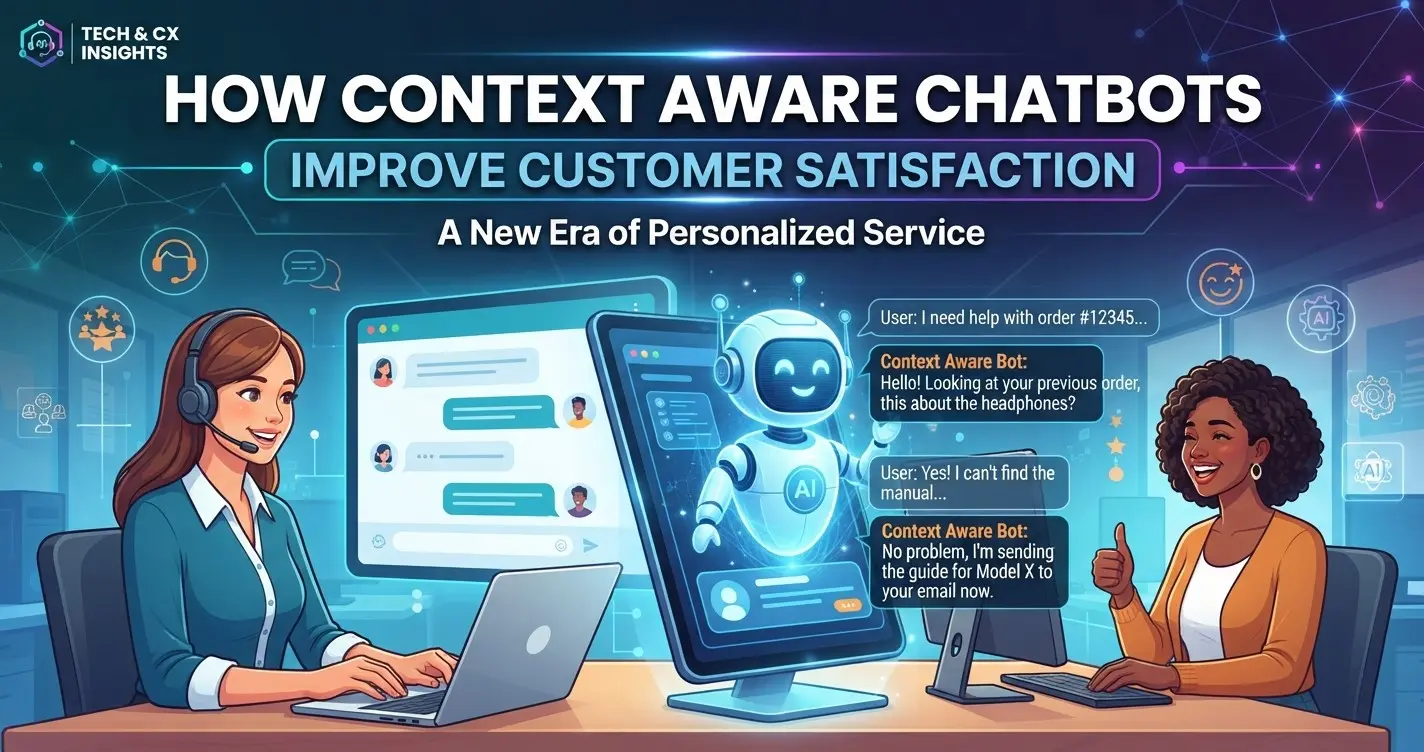
Personalization helps customers feel understood and valued during business interactions. Context-aware chatbots can use available customer preferences, previous questions, and purchase information to recommend relevant solutions. For example, an online retailer can provide product suggestions based on a customer’s earlier browsing or purchasing activity. These personalized responses make communication more useful and improve the overall shopping experience.
Reducing Repetitive Customer Questions
Customers often become frustrated when they need to explain the same problem multiple times. Context-aware technology helps prevent this situation by maintaining relevant information throughout an ongoing conversation. When customers return to a discussion, the chatbot can use available history to understand their previous concerns. This continuity saves time and creates a more convenient support experience.
Improving Customer Retention Through Intelligent Conversations
Customer retention depends on delivering consistent value and maintaining positive relationships after the initial purchase. Businesses that provide helpful support and understand customer expectations have better opportunities to encourage repeat purchases. Context aware chatbots contribute to this process by making customer communication more accessible, personalized, and efficient. They also help companies identify customer concerns before those issues negatively influence long-term relationships.
Building Stronger Customer Relationships
Strong customer relationships develop when businesses communicate consistently and respond to individual needs. Context-aware chatbots can recognize previous interactions and provide relevant information during follow-up conversations. This continuity helps customers avoid unnecessary explanations and creates a more connected experience. When customers receive reliable assistance across multiple interactions, their confidence in the business can increase.
Identifying Customer Problems Early
Customer complaints and repeated questions can reveal problems that affect satisfaction and retention. Intelligent chatbots can identify recurring concerns, recognize negative conversational patterns, and direct complicated issues to human support representatives. Businesses can use these insights to investigate service problems and improve their processes. Early intervention helps prevent unresolved concerns from becoming reasons for customers to leave.
The Role of Generative AI Chatbots in Contextual Communication
Generating Natural and Relevant Responses
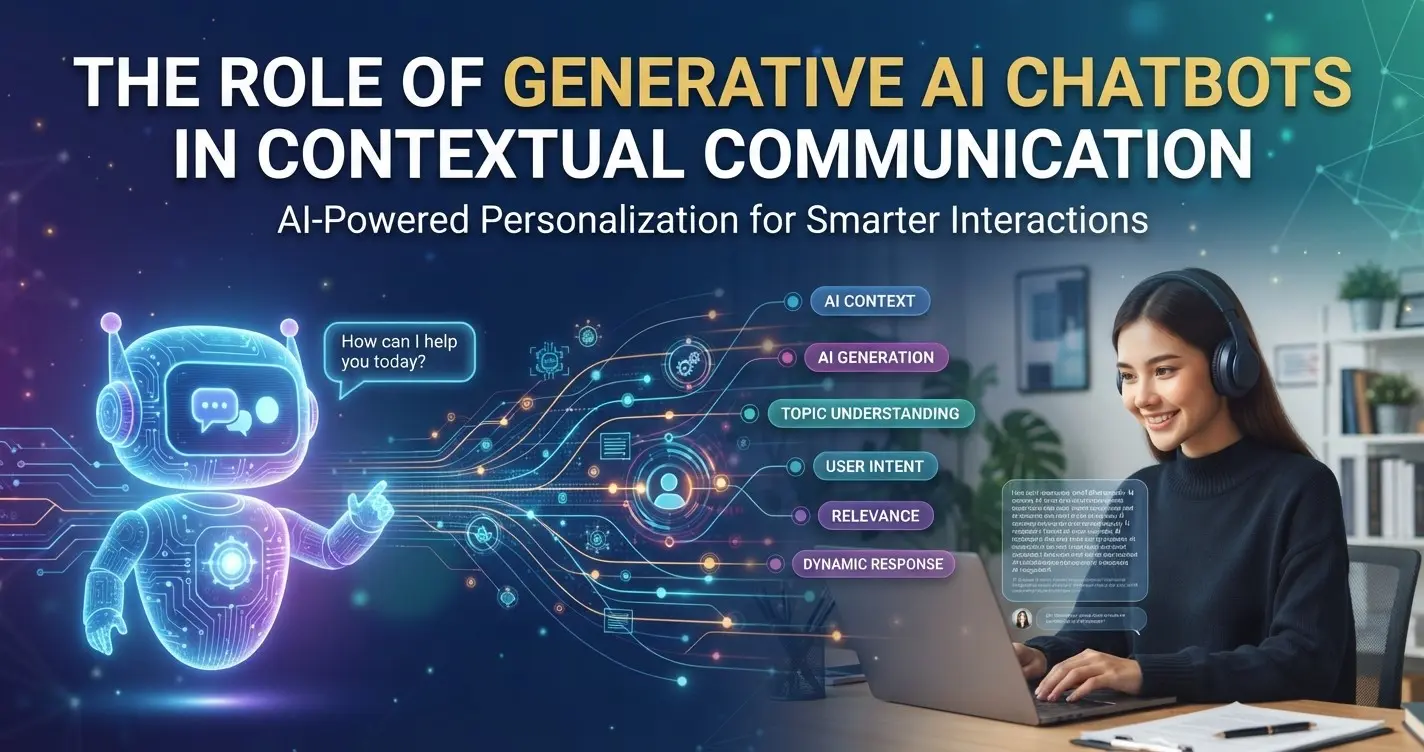
Customers expect conversational systems to understand questions expressed in different ways. Generative AI chatbots can interpret natural language and generate responses that match the purpose of a conversation. They can also explain complex information using simpler language and provide additional details when necessary. However, businesses should connect these systems with reliable information sources to reduce inaccurate or misleading responses.
Understanding Customer Intent
Understanding customer intent involves identifying what a person wants to accomplish rather than focusing only on individual keywords. Generative AI can analyze conversational language, recognize related requests, and provide responses based on available context. For example, a customer asking about a delayed order may also need information about refunds or delivery options. Understanding the broader situation allows chatbots to provide more useful assistance.
How Chatbot Integration Improves Business Communication
Chatbot integration connects conversational systems with business platforms such as customer relationship management software, ecommerce systems, help desks, and order management tools. This connection allows chatbots to access relevant information and provide more accurate customer assistance. Instead of operating as isolated communication tools, integrated chatbots become part of a broader customer service environment that supports consistent interactions across different business channels.
Connecting Chatbots With CRM Systems
Customer relationship management systems store important information about customer preferences, purchase history, and previous communication. Through Chatbot integration, businesses can allow chatbots to retrieve relevant CRM information when responding to customer questions. This capability supports personalized assistance and helps customer service teams understand previous interactions. Businesses must also apply appropriate access controls and privacy protections when handling customer information.
Integrating Ecommerce and Support Platforms
Ecommerce integration allows chatbots to provide information about products, payments, order status, and delivery updates. Customers can receive relevant assistance without navigating multiple pages or contacting separate departments. Connecting chatbots with help desk platforms also makes it easier to transfer complicated issues to human representatives. These integrations improve communication efficiency and create a more connected customer experience.
Using Live Chat Automation to Improve Customer Support

Providing Faster Responses Around the Clock
Customers may need assistance outside regular business hours, especially when purchasing products or accessing online services. Live chat automation allows businesses to respond to common questions at any time through automated support systems. Context-aware capabilities make these interactions more relevant by considering previous messages and customer requirements. However, businesses should provide clear escalation options when customers need human assistance.
Supporting Human Customer Service Teams
Automation works most effectively when it supports human representatives instead of attempting to replace every customer interaction. Chatbots can collect basic information, identify customer concerns, and summarize previous conversations before transferring an issue to a support agent. This process reduces repetitive work and helps representatives understand the situation more quickly. Customers benefit from smoother transitions and more informed assistance.
Essential Features of Effective Context Aware Chatbots
Businesses should evaluate chatbot capabilities carefully before selecting a solution for customer communication. An effective system needs more than natural language responses because it must understand conversational context, access reliable information, and maintain appropriate communication standards. Features such as conversational memory, multilingual support, customer data integration, and human handoff can improve usability while supporting different customer service requirements.
Conversational Memory and Context Management
Conversational memory helps chatbots maintain relevant information from previous messages and interactions. This capability allows them to understand follow-up questions and avoid requesting information that customers have already provided. However, businesses should establish clear rules regarding what information can be retained and for how long. Proper context management improves continuity while supporting responsible data handling.
Multilingual Communication and Accessibility
Businesses serving international audiences often communicate with customers who speak different languages. Multilingual chatbot capabilities help customers receive assistance in their preferred language and understand important information more easily. Accessibility features, including simple language and clear response structures, can also improve usability. These capabilities make customer support more inclusive and convenient across different markets.
Best Practices for Implementing Context Aware Chatbots
Successful chatbot implementation requires careful planning, reliable data, and continuous performance evaluation. Businesses should identify the customer problems they want to solve before selecting a chatbot platform. They should also determine which conversations can be automated and which require human involvement. A structured implementation strategy helps companies avoid unnecessary complexity while ensuring that chatbot interactions support their broader customer experience objectives.
Setting Clear Customer Service Objectives
Businesses should define measurable objectives such as reducing response times, improving customer satisfaction, and increasing successful issue resolution. These objectives help companies understand whether chatbot implementation is delivering meaningful improvements. Organizations should also identify common customer questions and prioritize the conversations that offer the greatest automation opportunities.
Monitoring Performance and Improving Responses
Regular performance monitoring helps businesses identify inaccurate answers, unresolved questions, and customer dissatisfaction. Companies can review chatbot conversations, collect customer feedback, and evaluate response quality to identify improvement opportunities. Updating knowledge sources and adjusting conversational workflows can make the system more reliable. Continuous optimization ensures that chatbot performance remains aligned with changing customer expectations.
Challenges Businesses Should Consider When Using Context Aware Chatbots
Although contextual chatbot technology offers several benefits, businesses must address important implementation challenges. Inaccurate responses, privacy concerns, integration difficulties, and excessive automation can negatively affect customer experiences. Companies should establish appropriate safeguards and regularly evaluate system performance. Understanding these limitations helps organizations implement intelligent communication solutions responsibly while maintaining customer trust and service quality.
Protecting Customer Privacy and Data Security
Context-aware systems may access personal information, purchase history, and previous conversations to provide relevant responses. Businesses must handle this information responsibly by applying suitable security controls, access restrictions, and data retention policies. They should also communicate clearly about how customer information is collected and used. Strong privacy practices help protect customers and maintain confidence in automated communication.
Maintaining Accuracy and Human Oversight
Chatbots can misunderstand complicated questions or generate incorrect information when their knowledge sources are incomplete. Businesses should regularly review chatbot responses and establish escalation procedures for sensitive or uncertain situations. Human representatives should remain available when customers require specialized assistance. Combining automation with human oversight helps maintain service quality and prevents avoidable communication problems.
Conclusion
Context aware chatbots are becoming valuable tools for businesses that want to improve customer retention and satisfaction through intelligent communication. Their ability to understand conversational history, recognize customer intent, and deliver personalized responses creates more convenient support experiences. By combining Generative AI chatbots, Chatbot integration, and Live chat automation, organizations can improve communication efficiency while maintaining stronger customer relationships. However, successful implementation requires reliable information, privacy protection, continuous monitoring, and appropriate human involvement. Businesses that focus on customer needs rather than automation alone can use contextual chatbot technology to build trust, encourage repeat purchases, and develop long-term customer loyalty.
Frequently Asked Questions (FAQs)
1. What Are Context Aware Chatbots?
Context aware chatbots are intelligent conversational systems that understand customer messages by considering previous interactions, conversation history, and relevant information. They provide responses based on the broader meaning of a discussion rather than relying only on individual keywords. This approach creates more natural and personalized communication.
2. How Do Context Aware Chatbots Improve Customer Retention?
These chatbots improve customer retention by providing consistent, personalized, and convenient support throughout customer interactions. They reduce repetitive questions, identify customer concerns, and deliver relevant assistance. Better communication experiences can strengthen customer trust and encourage people to continue using a business.
3. What Is the Difference Between Traditional and Context Aware Chatbots?
Traditional chatbots generally follow predefined rules and scripted responses when answering customer questions. Context-aware chatbots analyze conversational information to understand customer intent and maintain continuity. This makes them more flexible when handling follow-up questions and complex customer interactions.
4. Can Generative AI Improve Context Aware Chatbots?
Yes, Generative AI chatbots can improve contextual communication by interpreting natural language and generating relevant responses. They can understand different question formats and provide more flexible assistance. Connecting them with accurate business information and appropriate safeguards helps improve response reliability.
5. How Does Chatbot Integration Benefit Businesses?
Chatbot integration connects conversational systems with CRM platforms, ecommerce websites, and customer support software. This allows chatbots to access relevant information and provide more personalized assistance. It also helps businesses coordinate customer communication and reduce repetitive support activities.
6. What Is the Role of Live Chat Automation in Customer Satisfaction?
Live chat automation helps businesses respond to common customer questions without requiring an available human representative for every interaction. It improves response availability, reduces waiting times, and supports routine communication. Combining automation with human assistance creates a more balanced customer support experience.
7. Can Context Aware Chatbots Handle Complex Customer Questions?
Context-aware chatbots can manage many complex conversations by analyzing previous messages and available customer information. However, they may struggle with sensitive issues or requests requiring specialized judgment. Businesses should provide human escalation options for situations that automated systems cannot resolve accurately.
8. Are Context Aware Chatbots Suitable for Small Businesses?
Yes, small businesses can use context-aware chatbots to manage common customer questions, provide product information, and improve communication availability. Affordable chatbot platforms can help smaller organizations automate routine support activities. Businesses should select solutions based on their customer needs, budget, and technical requirements.
9. How Can Businesses Measure Chatbot Performance?
Businesses can evaluate chatbot performance through customer satisfaction scores, response times, resolution rates, conversation completion rates, and customer retention. Reviewing these measurements helps identify problems and improve conversational quality. Customer feedback also provides useful information about whether automated assistance meets user expectations.
10. What Is the Future of Context Aware Chatbots?
The future of context-aware chatbots will likely involve more advanced artificial intelligence, improved conversational memory, multilingual communication, and deeper business platform integration. These developments may create more personalized customer experiences. However, privacy protection, response accuracy, and human oversight will remain essential for successful implementation.
The Benefits of Chatbot User Intent Recognition for Business Automation
How Context Aware Chatbots Improve Customer Retention and Satisfaction
How Businesses Can Use AI Chatbot Training Data to Improve Customer Experience
How Multilingual AI Chatbots Help Businesses Reach Global Audiences