
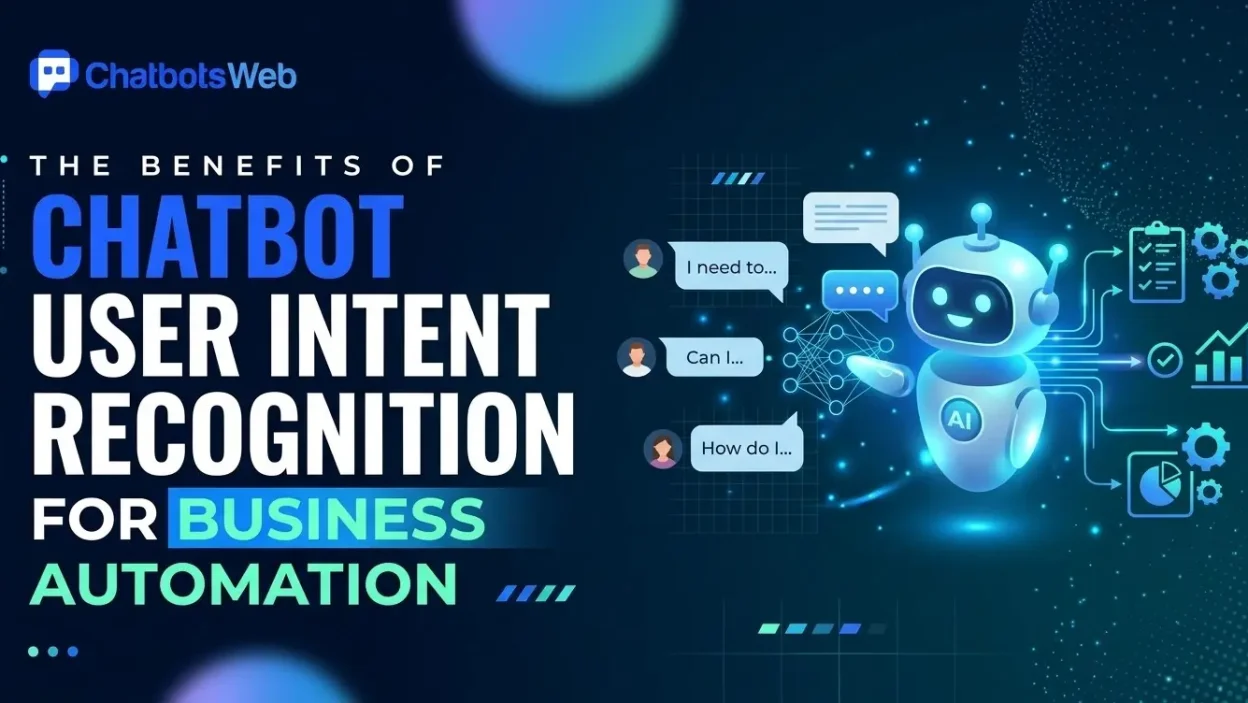
Businesses are increasingly adopting automation to improve customer service, reduce operational costs, and manage growing customer expectations. Traditional customer support systems often depend on predefined responses and manual assistance, which can create delays when customers ask complex or unexpected questions. Modern conversational systems address these challenges by understanding what customers actually want rather than simply matching individual words. This is where Chatbot user intent recognition becomes important.
By combining Business chatbots, advanced Chatbot technology, and Chatbot automation, organizations can build more efficient customer service operations. From answering product questions to processing service requests, intent recognition helps businesses handle conversations more effectively while allowing employees to focus on complex responsibilities.
What Is Chatbot User Intent Recognition?
Chatbot user intent recognition is the process of identifying the objective or purpose behind a message entered by a customer. It helps a chatbot understand whether someone wants product information, technical assistance, order updates, pricing details, or another type of support. This process allows the system to select an appropriate response or action based on the customer’s actual requirement.
For example, a customer might write, “Where is my package?” or “Can you check my delivery status?” Although these sentences use different wording, both communicate the same intention. An intelligent chatbot can recognize that the customer wants delivery information and direct the conversation toward the appropriate response.
How Chatbot User Intent Recognition Works
Understanding Customer Messages
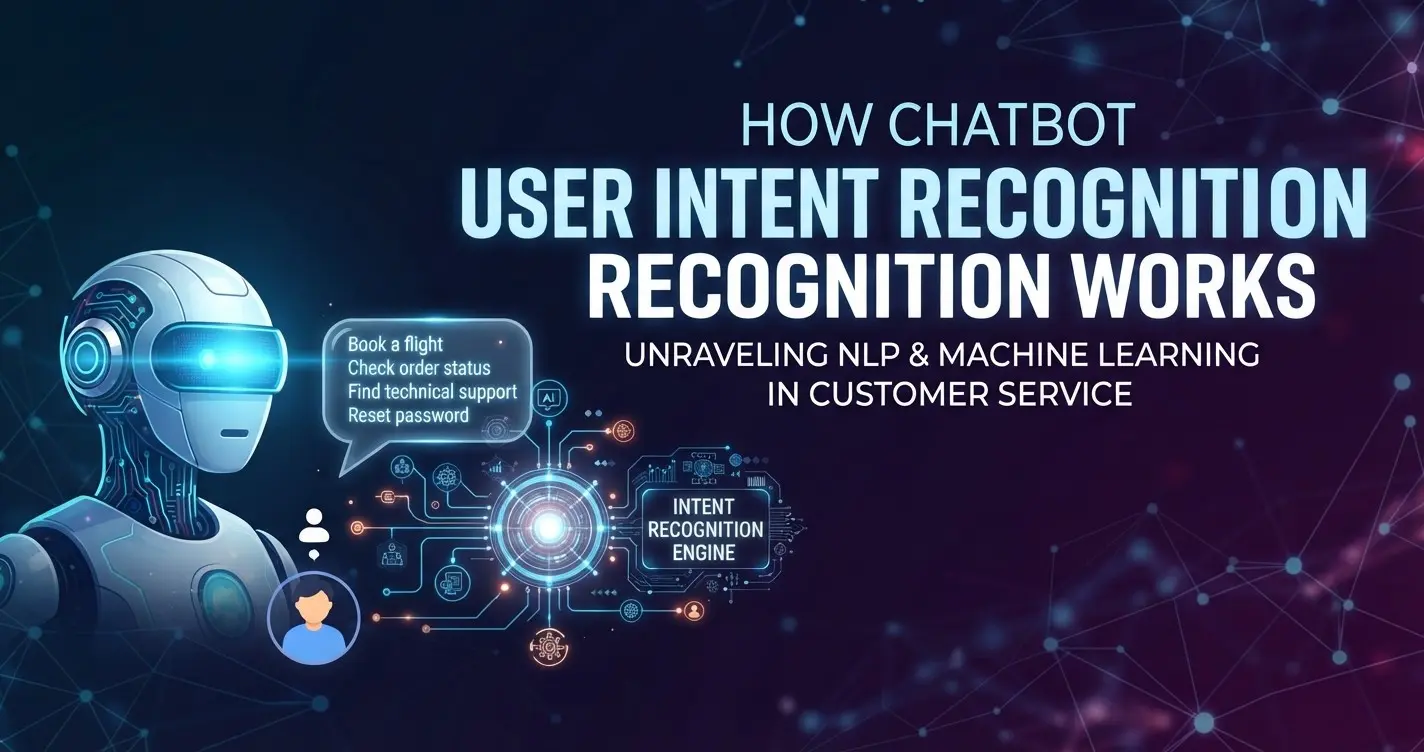
The first stage involves collecting and analyzing the message submitted by a customer. A chatbot examines the words, sentence structure, and relevant context to identify what the person is trying to communicate. This process helps the system understand messages even when customers use informal language, abbreviations, or different sentence structures.
For example, customers may ask about business operating hours by writing, “Are you open today?” or “What time do you close?” Although the wording differs, the chatbot can recognize that both messages relate to business hours. This ability reduces dependence on exact keywords and creates more flexible conversations.
Identifying and Classifying Intent
After analyzing a message, the chatbot assigns it to an appropriate intent category. Common categories include purchasing assistance, appointment scheduling, billing questions, account support, and order tracking. Each category represents a particular customer requirement, allowing the chatbot to determine which response or workflow should follow.
Businesses can create intent categories based on their products, services, and customer support requirements. Proper classification makes automated communication more organized because the system can direct different requests to relevant information sources or business processes. It also helps prevent unrelated responses that can frustrate customers.
Generating Relevant Responses
Once the chatbot identifies an intent, it selects a suitable response or triggers an appropriate action. Depending on its capabilities, the system might provide an answer, retrieve customer information, update an order, or connect the customer with a human representative. This stage transforms language understanding into useful business communication.
Advanced systems can also consider previous messages when generating responses. For instance, if a customer asks about a particular product and then asks whether it is available in another size, the chatbot can use conversational context to understand the follow-up question. This makes interactions more natural and reduces unnecessary repetition.
Major Benefits of Chatbot User Intent Recognition for Businesses
Intent recognition offers several advantages for organizations that want to improve communication and automate repetitive operations. By understanding customer requirements more accurately, businesses can reduce manual workloads, improve service quality, and manage customer interactions more efficiently. These benefits can support both small businesses and larger organizations with high communication volumes.
Improving Customer Support Efficiency
Customer support teams frequently receive similar questions about pricing, delivery, account access, product features, and service availability. Answering these questions manually can consume considerable employee time, particularly when customer inquiries arrive through multiple communication channels. Intent recognition allows chatbots to identify common requests and respond without requiring continuous human involvement.
This automation can reduce waiting times and help support teams manage larger volumes of conversations. Employees can concentrate on complicated complaints, technical problems, and situations requiring personal judgment. As a result, businesses can improve support efficiency without relying entirely on additional customer service staff.
Delivering Faster and More Accurate Responses
Customers generally expect businesses to provide timely and relevant answers when they request assistance. However, traditional automated systems may struggle when customers phrase questions differently from predefined scripts. Intent recognition addresses this limitation by identifying the purpose of a message instead of depending exclusively on exact wording.
For example, a customer might ask, “How much does delivery cost?” while another writes, “What is your shipping fee?” A chatbot with effective intent recognition can identify both as delivery pricing inquiries. Providing consistent and relevant answers helps businesses maintain communication quality while reducing confusion during customer interactions.
Reducing Operational Costs
Managing customer communication requires employee salaries, training, software, and other operational resources. When employees spend a large portion of their working hours answering repetitive questions, businesses may struggle to allocate resources effectively. Intent-based chatbots can automate many routine conversations and reduce the amount of manual support required.
Although implementing chatbot systems involves initial development and maintenance expenses, automation can provide long-term operational benefits. Businesses can handle more inquiries without increasing support staff at the same rate as customer demand. This makes intelligent automation a practical option for organizations seeking sustainable operational improvements.
Supporting 24/7 Customer Communication
Customers do not always contact businesses during standard office hours. Online shoppers may need product information late at night, while international customers may request assistance from different time zones. Intent recognition enables automated systems to understand and respond to common inquiries even when human representatives are unavailable.
Continuous availability can improve customer convenience and help businesses maintain communication outside normal working hours. Customers can receive basic assistance, explore services, and find relevant information whenever they need it. For complex issues, the chatbot can collect necessary details and arrange further assistance from an employee.
The Role of Business Chatbots in Automated Operations
Automating Customer Inquiries
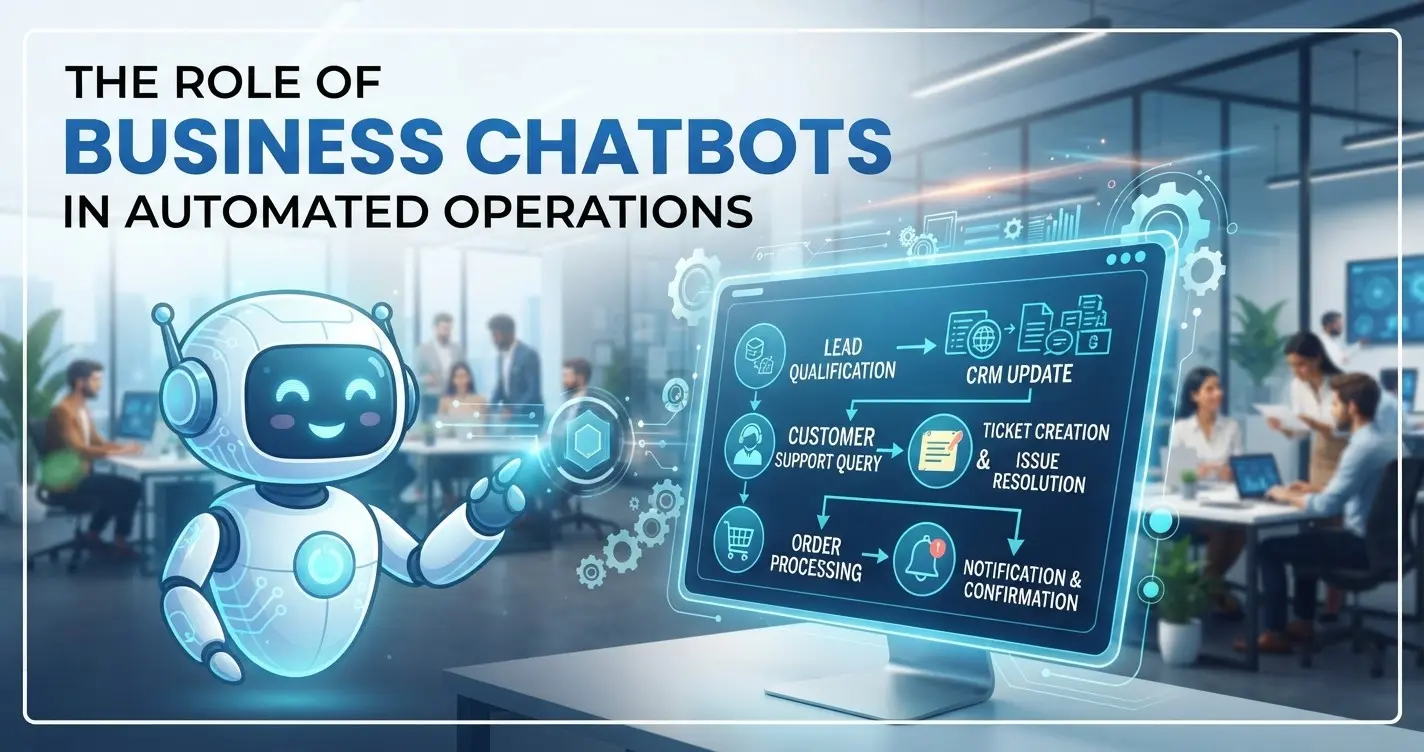
Businesses receive inquiries about product availability, service packages, payment methods, return policies, and appointment schedules. A chatbot can identify the intent behind each inquiry and retrieve relevant information from an approved knowledge base. Customers can therefore receive answers without waiting for an employee to respond to every routine question.
Automated inquiry management is especially useful for businesses that receive large numbers of similar messages. It creates a more organized communication process and helps employees avoid repetitive work. However, businesses should regularly review chatbot responses to ensure that the information remains accurate and consistent with current policies.
Improving Lead Qualification
Lead qualification involves understanding whether a potential customer is genuinely interested in a product or service. An intent-aware chatbot can ask relevant questions about customer needs, budgets, preferences, and purchasing timelines. Based on the responses, it can collect useful information and identify leads that require attention from the sales team.
This process helps businesses organize incoming leads and reduce manual qualification activities. Sales representatives can prioritize conversations with customers who demonstrate stronger purchasing interest. When properly configured, chatbots can also collect contact details and transfer qualified leads to the appropriate team for follow-up.
Supporting Sales and E-Commerce Activities
Online businesses can use chatbots to assist customers throughout their purchasing journey. When someone asks about product specifications, available sizes, delivery options, or payment methods, the chatbot can recognize the request and provide relevant information. It can also guide customers toward suitable products based on their stated requirements.
Intent recognition can improve the shopping experience by reducing the effort required to find information. Customers can receive assistance without navigating multiple website pages or waiting for support representatives. When integrated with inventory and order management systems, chatbots can also provide more useful purchasing and order-related assistance.
How Chatbot Technology Strengthens Business Automation
Modern Chatbot technology combines natural language processing, machine learning, conversational design, and software integration to support intelligent communication. These capabilities help businesses understand customer requests and connect conversations with useful information or actions. Intent recognition is an important part of this technology because it determines what the customer wants before the system responds.
Natural Language Processing and Contextual Understanding
Natural language processing allows chatbots to interpret human language in a structured way. It helps systems identify relevant words, understand sentence relationships, and recognize different expressions that communicate similar meanings. These capabilities make automated conversations more flexible than traditional systems that depend on fixed commands.
Contextual understanding further improves the process by considering earlier messages within a conversation. If a customer discusses a specific service and then asks about its price, the chatbot can use the previous discussion to interpret the follow-up. This reduces misunderstandings and helps maintain a consistent conversational experience.
Machine Learning and Continuous Improvement
Machine learning can help chatbot systems improve their ability to recognize customer intent through training examples and feedback. Developers can train models using different ways customers express similar requests. When the chatbot encounters new communication patterns, businesses can evaluate its performance and update the training data where necessary.
Continuous improvement is important because customer language and business requirements change over time. New products, services, policies, and customer questions may introduce additional intent categories. Regular testing helps organizations identify classification errors, improve response accuracy, and maintain reliable automated communication.
Integration With Business Systems
Chatbots become more valuable when connected with systems that manage customer information and business operations. For example, integration with customer relationship management platforms can help sales teams access lead information, while connections with order management software can support delivery updates and purchase-related inquiries.
These integrations allow intent recognition to trigger meaningful actions rather than simply generating text responses. A chatbot may identify a billing question and retrieve the relevant account information through an authorized system. Businesses must implement appropriate authentication and access controls to protect customer information during these interactions.
The Importance of Chatbot Automation Across Different Industries
Chatbot automation can support many industries because customer communication and repetitive administrative tasks exist across different business environments. Intent recognition makes this automation more useful by helping systems identify the type of assistance required. Businesses can configure their chatbots according to industry-specific workflows, customer expectations, and operational requirements.
Banking and Financial Services
Banks and financial institutions receive frequent inquiries about account services, transaction information, payment procedures, and card-related issues. Intent-aware chatbots can identify common requests and guide customers toward appropriate information or secure service channels. This reduces pressure on support representatives and improves access to basic banking assistance.
However, financial conversations require strict security measures. Businesses should avoid exposing sensitive account information through unsecured interactions and use proper authentication before allowing account-specific actions. Complex financial concerns should also be transferred to qualified representatives when automated assistance is insufficient.
Healthcare and Appointment Management
Healthcare organizations can use chatbots to manage appointment inquiries, clinic information, service availability, and basic administrative communication. When patients ask to schedule, change, or cancel appointments, intent recognition helps the system identify the request and direct it toward the appropriate scheduling process.
These systems can reduce administrative workloads and make basic information easier to access. However, chatbots should not replace professional medical judgment or independently diagnose health conditions. Healthcare organizations must also follow applicable privacy requirements when collecting and processing patient information.
Retail and E-Commerce
Retail businesses can automate product inquiries, order tracking, return requests, and delivery questions through intelligent chatbots. Customers can describe their requirements naturally, allowing the system to identify the correct category of assistance. This makes online shopping more convenient and helps businesses manage large volumes of customer communication.
For e-commerce companies, intent recognition can also support product discovery and purchasing decisions. When connected to accurate inventory and order databases, chatbots can provide relevant product information and updates. Businesses should ensure that product availability, pricing, and delivery information remain synchronized with their actual systems.
Challenges Businesses Should Consider Before Implementation
Although intent recognition provides significant automation opportunities, businesses must consider several challenges before deploying these systems. Poorly designed chatbots may misunderstand customer messages, provide inaccurate answers, or create frustrating conversational experiences. Successful implementation requires appropriate planning, reliable information, regular testing, and a clear process for human assistance.
Handling Ambiguous Customer Messages
Some customer messages can have multiple meanings depending on the conversation. For example, the word “cancel” might refer to an order, appointment, subscription, or payment process. If a chatbot cannot identify the intended action confidently, it should ask a clarifying question rather than make an unsupported assumption.
A well-designed system should recognize when additional information is necessary. This reduces incorrect actions and helps customers reach the right solution. Businesses should also establish clear confidence thresholds that determine when the chatbot can respond automatically and when it needs further clarification.
Protecting Customer Data and Privacy
Chatbots may process personal details, account information, contact numbers, and purchasing records during conversations. Businesses must protect this information through secure integrations, appropriate access permissions, data encryption, and responsible retention practices. Collecting unnecessary information can increase privacy risks and create additional responsibilities.
Organizations should explain how customer information is used and ensure that chatbot systems follow applicable data protection requirements. Regular security assessments and controlled access to connected business systems are essential for maintaining customer trust.
Maintaining Human Support Options
Automation cannot resolve every customer problem. Complicated complaints, unusual service requests, emotional situations, and sensitive decisions may require direct communication with a human representative. Businesses should therefore design chatbot workflows that provide a straightforward option for escalating conversations.
Human support also helps organizations identify situations where automated responses are insufficient. By reviewing escalated conversations, teams can discover missing intent categories, improve training examples, and update chatbot workflows. Combining automation with human judgment creates a more balanced customer service strategy.
Best Practices for Implementing Chatbot User Intent Recognition
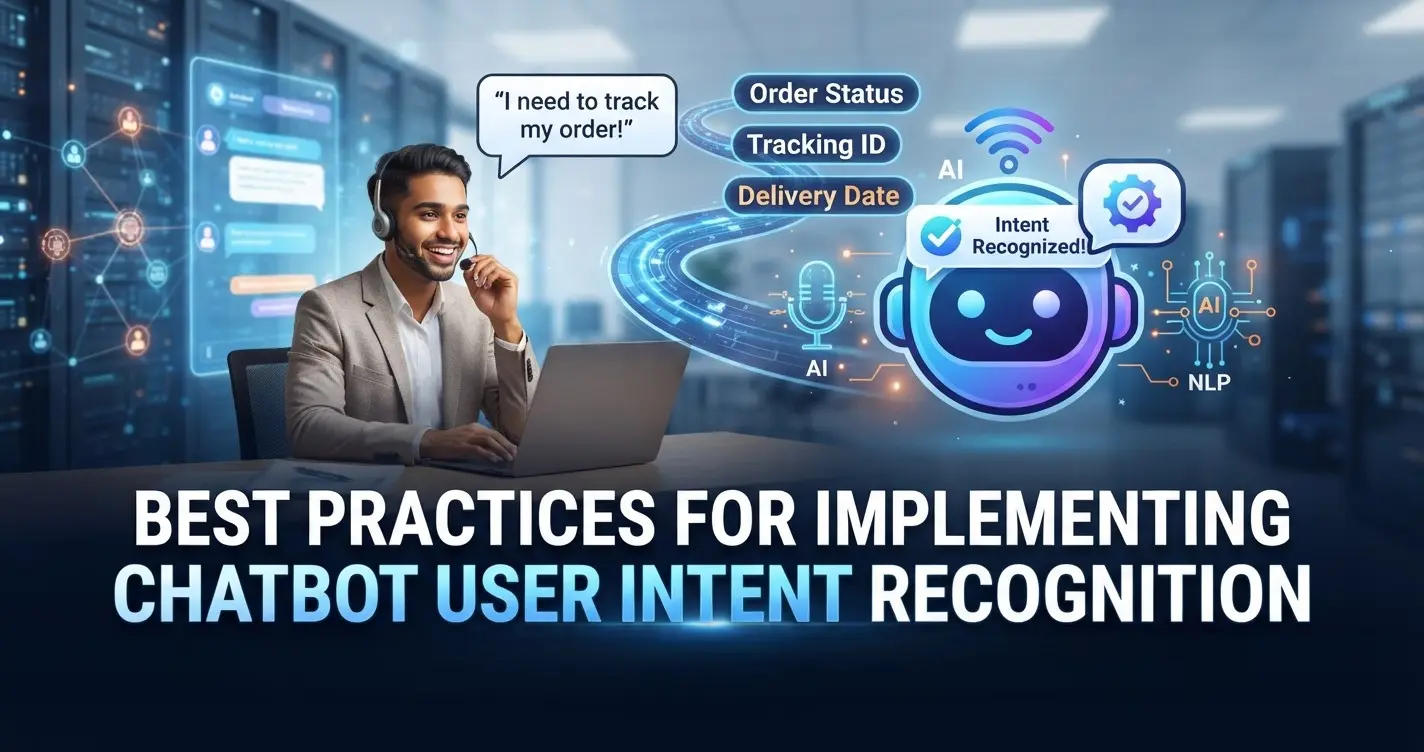
Companies should also use realistic training examples that represent different customer expressions, spelling variations, and informal language. Testing the chatbot with unfamiliar questions can reveal weaknesses before the system becomes available to customers. Regular performance reviews should examine intent classification accuracy, unresolved conversations, customer satisfaction, and successful task completion.
Conclusion
Chatbot user intent recognition plays an important role in modern business automation by helping organizations understand customer requirements and respond more effectively. Instead of relying entirely on fixed keywords or predefined scripts, intelligent chatbots can identify the purpose behind different messages and connect customers with relevant information or actions.
By combining Business chatbots, advanced Chatbot technology, and effective Chatbot automation, businesses can improve customer support, reduce repetitive workloads, and provide more consistent communication. However, successful implementation requires accurate training data, secure integrations, continuous evaluation, and access to human assistance. Organizations that approach intent recognition strategically can create more efficient operations while delivering a better customer experience.
Frequently Asked Questions (FAQs)
1. What is chatbot user intent recognition?
Chatbot user intent recognition is the process of identifying the purpose behind a customer’s message. It allows a chatbot to understand what someone wants and provide a relevant response or perform an appropriate action.
2. Why is chatbot user intent recognition important for businesses?
It helps businesses automate repetitive communication, improve response accuracy, reduce customer waiting times, and manage support requests more efficiently. It also allows employees to focus on complex tasks that require human judgment.
3. How does a chatbot recognize customer intent?
A chatbot analyzes customer messages using natural language processing, machine learning, and contextual information. It then classifies the message into an appropriate intent category and selects a relevant response or workflow.
4. What are the common examples of chatbot user intents?
Common examples include product inquiries, order tracking, appointment scheduling, payment questions, account assistance, refund requests, and technical support. Businesses can create additional categories according to their operational requirements.
5. Can chatbot user intent recognition improve customer experience?
Yes, it can improve customer experience by helping chatbots understand different ways of expressing the same request. Customers can receive more relevant responses without needing to follow rigid commands or repeat their questions unnecessarily.
6. What is the role of business chatbots in automation?
Business chatbots automate customer communication, lead qualification, product inquiries, appointment management, and other repetitive activities. They help businesses manage conversations efficiently while reducing manual workloads.
7. How does chatbot technology support intent recognition?
Chatbot technology uses natural language processing, machine learning, and contextual analysis to understand customer messages. These capabilities help chatbots recognize different communication patterns and select appropriate responses.
8. Is chatbot automation suitable for small businesses?
Yes, small businesses can use Chatbot automation to manage common customer inquiries, collect leads, provide service information, and support customers outside office hours. The system should match the company’s actual needs and available resources.
9. What challenges can businesses face when implementing intent recognition?
Businesses may experience incorrect intent classification, ambiguous messages, outdated training data, privacy concerns, and integration difficulties. Regular testing, secure system connections, and human support options can help address these challenges.
10. Can chatbot user intent recognition replace human customer support?
No, intent recognition can automate many routine interactions, but it cannot fully replace human support. Complex complaints, sensitive situations, and unusual requests often require personal attention and professional judgment.
The Benefits of Chatbot User Intent Recognition for Business Automation
How Context Aware Chatbots Improve Customer Retention and Satisfaction
How Businesses Can Use AI Chatbot Training Data to Improve Customer Experience
How Multilingual AI Chatbots Help Businesses Reach Global Audiences