
AI chatbot personalization is transforming how businesses communicate with customers by delivering relevant, contextual, and helpful interactions across digital channels. Instead of providing identical responses to every visitor, personalized chatbots can use available customer information, conversation history, preferences, and stated needs to make interactions more meaningful. This approach helps businesses respond efficiently, reduce communication barriers, and create customer experiences that feel more relevant to individual requirements.
As customer expectations continue to evolve, organizations are adopting AI chatbot development to improve support, assist potential buyers, and deliver faster answers. Modern Business chatbots can also work alongside Live chat automation to manage routine inquiries while allowing human agents to handle complex situations. When implemented responsibly, AI chatbot personalization helps companies improve customer engagement, strengthen relationships, and streamline communication without sacrificing accuracy, privacy, or the human touch.
Understanding AI Chatbot Personalization
AI chatbot personalization involves adapting chatbot responses and recommendations to a customer’s needs, preferences, and current situation. Instead of relying exclusively on fixed scripts, personalized chatbots can interpret conversational context and use relevant information to provide more appropriate assistance. The objective is not simply to make conversations sound natural but to help customers find accurate answers and complete tasks with less effort.
How Personalized AI Chatbots Work
Personalized chatbots combine conversational AI, natural language processing, and customer information to understand incoming messages and determine suitable responses. Depending on their configuration, they may use previous interactions, product preferences, account details, or information provided during the current conversation. Integrations with customer relationship management systems and knowledge bases can provide additional context, helping chatbots deliver consistent assistance while respecting access permissions and data privacy requirements.
Why Personalization Matters for Businesses
Generic responses can frustrate customers when they need specific information about a product, service, or account. Personalized conversations help businesses address these needs more directly and reduce unnecessary back-and-forth communication. For example, an online retailer’s chatbot might guide a visitor toward products that match their stated requirements. Providing relevant assistance can improve customer satisfaction and help businesses create more useful digital experiences.
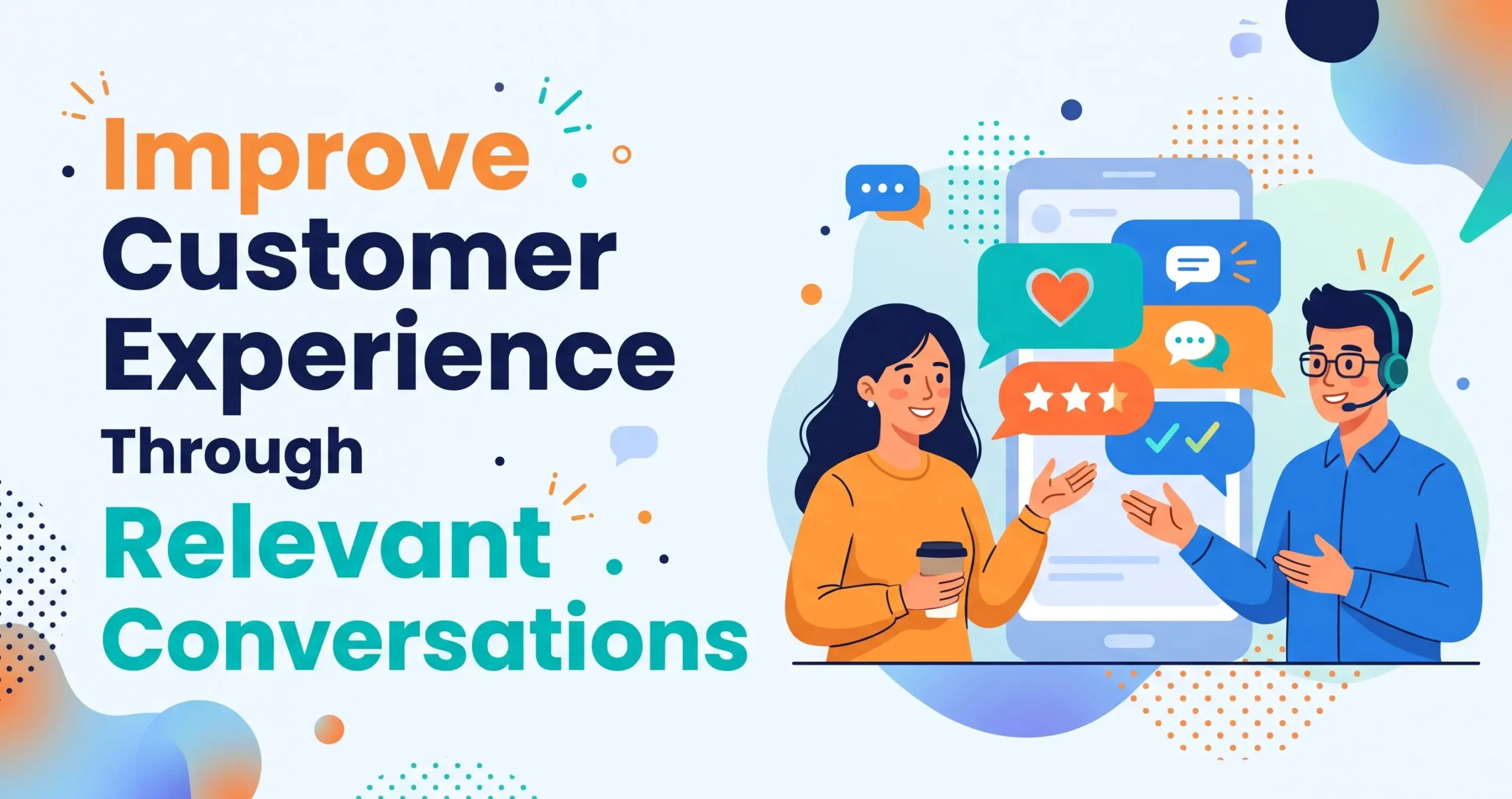
Improve Customer Experience Through Relevant Conversations
Understand Customer Intent and Preferences
A personalized chatbot should identify what the customer wants to accomplish before recommending an answer or action. Natural language processing can help interpret questions expressed in different ways, while carefully designed follow-up questions can clarify incomplete requests. Businesses should use relevant signals rather than making unsupported assumptions about customers. This approach helps chatbots respond appropriately and reduces the likelihood of confusing or irrelevant recommendations.
Maintain Context Across Conversations
Conversation context helps a chatbot understand references to earlier messages, previously discussed products, or unresolved questions. When supported by the platform and permitted by the customer’s privacy settings, appropriate conversation history can reduce repetition and improve continuity. Businesses should distinguish between temporary conversational context and long-term customer records, ensuring that information is stored only when necessary and managed according to applicable privacy requirements.
Use AI Chatbot Development to Create Smarter Solutions
Effective AI chatbot development requires more than connecting a language model to a messaging interface. Businesses must define clear objectives, identify common customer questions, prepare reliable information sources, and establish rules for handling sensitive requests. A well-designed chatbot combines conversational intelligence with accurate business information, appropriate integrations, and clear escalation procedures, creating a dependable experience that supports customers without introducing unnecessary complexity.
Integrate Reliable Knowledge Sources
A chatbot can only provide dependable answers when it has access to relevant and trustworthy information. Businesses can connect their chatbots to approved FAQs, product documentation, service policies, and other maintained knowledge sources. Retrieval-based approaches can help the chatbot find relevant information before generating an answer. Regular content reviews are essential because outdated prices, inaccurate policies, and incomplete documentation can lead to misleading responses.
Design Conversations Around Customer Goals
Chatbot conversations should reflect the tasks customers want to complete, such as tracking an order, comparing services, scheduling an appointment, or requesting support. Developers can map common user journeys and create conversational paths that minimize unnecessary questions. Although flexible AI responses can handle varied wording, clear workflow rules remain important for critical transactions. Testing with realistic customer questions helps identify confusing interactions before the chatbot reaches a wider audience.
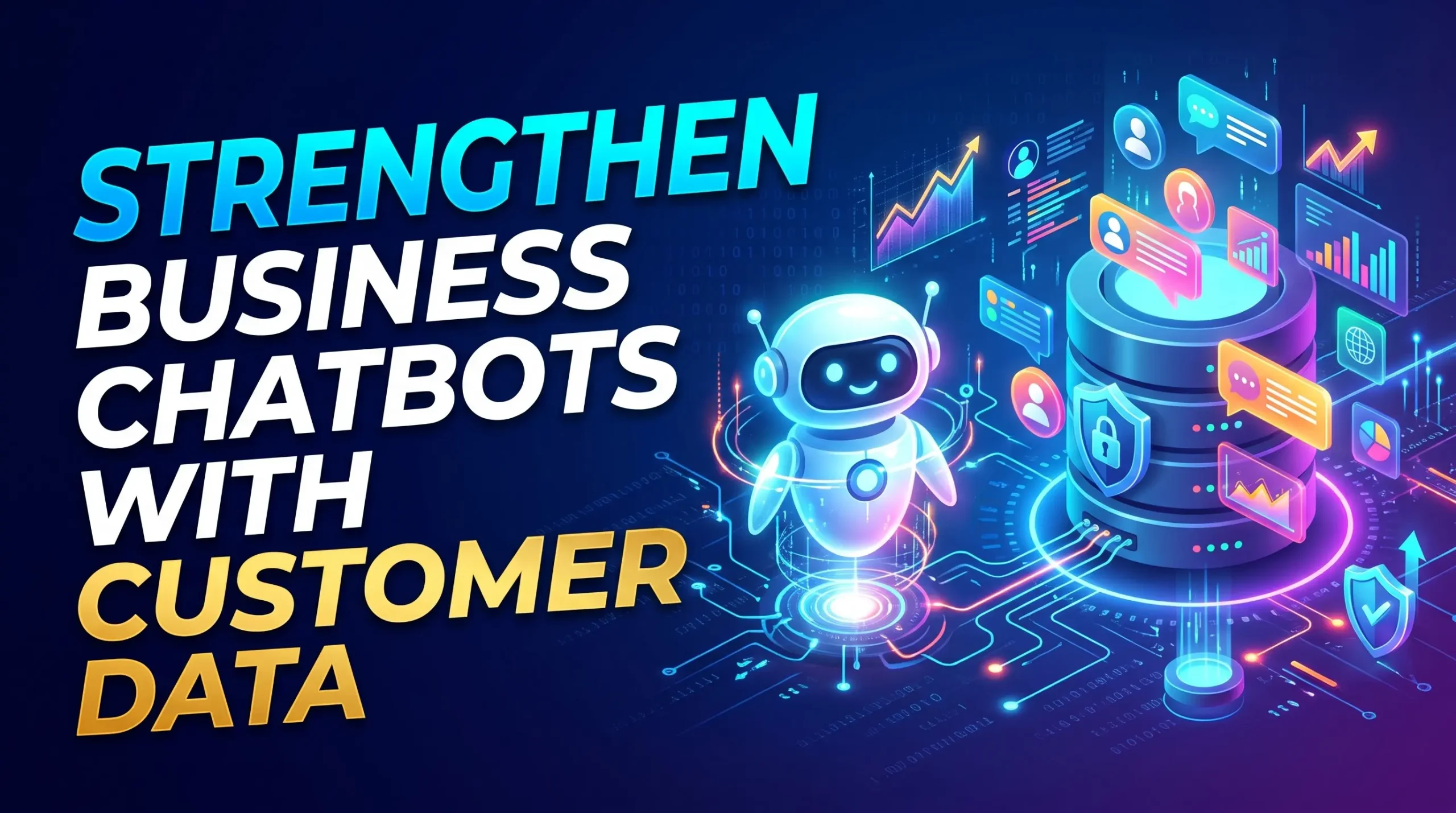
Strengthen Business Chatbots With Customer Data
Connect Chatbots With CRM Systems
Customer relationship management integrations can help chatbots retrieve authorized customer records, update contact information, and route inquiries to the appropriate team. For example, a chatbot may recognize an existing support case and direct the customer toward its current status rather than asking them to explain the issue again. Businesses should validate customer identity before revealing protected information and maintain clear records of important automated actions.
Personalize Product and Service Recommendations
Personalized recommendations can help customers navigate large product catalogs or understand which services fit their stated requirements. A chatbot might ask about budget, preferred features, or intended use before suggesting relevant options. Recommendations should be based on accurate product information and clearly communicated criteria. Businesses should avoid presenting uncertain suggestions as guaranteed outcomes and provide customers with alternatives when the available information is insufficient.
Combine Live Chat Automation With Human Support
Live chat automation helps businesses manage routine customer interactions, organize incoming requests, and reduce waiting times. When combined with AI chatbot personalization, automated systems can collect relevant details, answer common questions, and direct conversations to suitable support channels. However, automation should complement human assistance rather than replace it in every situation. A smooth transition between chatbots and human agents is essential for resolving complex problems and maintaining customer trust.
Automate Routine Customer Inquiries
Businesses can automate frequently asked questions about opening hours, delivery policies, appointment availability, account procedures, and basic troubleshooting. The chatbot can provide approved answers or guide customers through predefined steps. This reduces repetitive work for support teams and allows employees to focus on cases requiring investigation or judgment. Organizations should monitor unanswered questions and update automated responses as customer needs and business policies change.
Create Seamless Human Handoffs
Some interactions require empathy, specialist knowledge, or decisions that automated systems should not make independently. Customers should have a clear way to request a human agent when the chatbot cannot resolve an issue. During the handoff, the system should transfer relevant conversation details and the reason for escalation, subject to applicable privacy rules. This prevents customers from repeating information and helps agents continue the conversation with greater context.
Protect Customer Privacy and Build Trust
Personalized chatbot experiences depend on information, making privacy and security essential parts of implementation. Businesses should explain what information is collected, why it is needed, and how it will be used. They should apply appropriate retention policies, restrict access to sensitive records, and review vendor practices. Transparent data handling helps customers understand the benefits of personalization without feeling that their interactions are being monitored unnecessarily.
Apply Responsible Data Practices
Businesses should collect only the information needed to provide a useful service and avoid requesting sensitive details without a legitimate reason. Access controls, secure integrations, and appropriate data retention procedures can reduce privacy risks. Chatbot systems should also avoid exposing one customer’s information to another. Regular security reviews and testing help identify weaknesses before they affect customers or business operations.
Prevent Misleading or Inappropriate Responses
AI chatbots can occasionally misunderstand requests or generate inaccurate information. Organizations should define the chatbot’s limitations, restrict unsupported claims, and provide reliable routes to human assistance. For important matters, responses should be grounded in approved information and verified before critical actions are completed. Businesses should also monitor conversation quality and provide a straightforward way for customers to report incorrect or unhelpful answers.
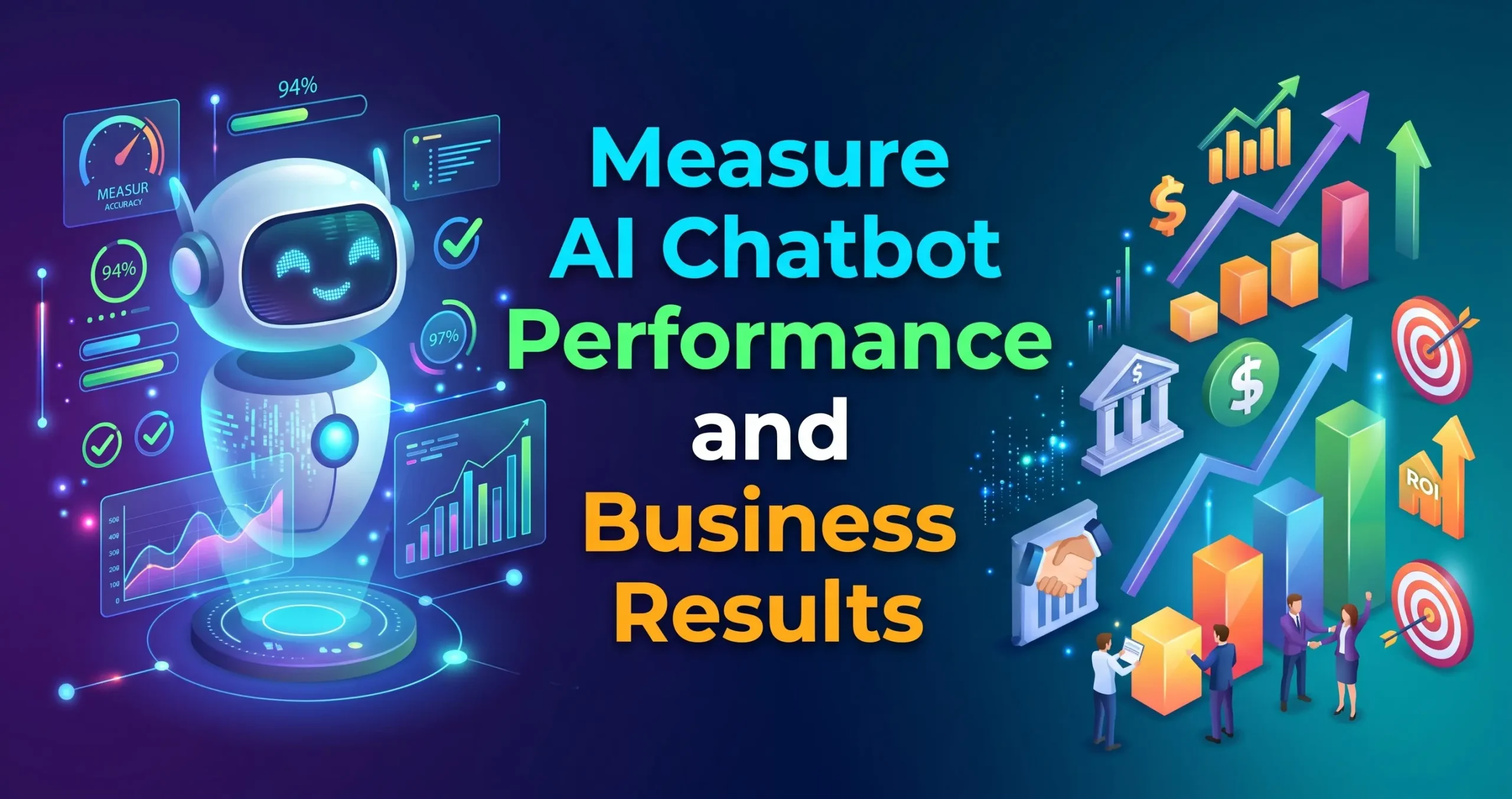
Measure AI Chatbot Performance and Business Results
Track Meaningful Performance Metrics
Useful metrics include successful resolution rates, average response time, customer satisfaction scores, conversation abandonment, and the percentage of inquiries transferred to human agents. Businesses should interpret these indicators together because a low escalation rate does not necessarily mean customers receive better assistance. Reviewing conversation samples and customer feedback provides additional context and helps identify recurring problems that numerical metrics may overlook.
Continuously Improve Chatbot Responses
Chatbot improvement should be an ongoing process based on real customer needs and measured results. Businesses can review unanswered questions, identify common misunderstandings, update knowledge sources, and test revised conversation flows. Changes should be evaluated carefully to ensure that improvements in speed do not reduce accuracy or customer satisfaction. Regular testing across different scenarios helps maintain reliable performance as products, policies, and customer expectations evolve.
Conclusion
AI chatbot personalization enables businesses to create smarter customer interactions by adapting conversations to relevant preferences, needs, and context. Through thoughtful AI chatbot development, organizations can build Business chatbots that provide useful information, support customer decisions, and integrate with existing business systems. Combining these capabilities with Live chat automation can streamline routine inquiries while preserving access to human support when situations require additional expertise.
Successful implementation depends on accurate information, secure data practices, clear conversation design, and continuous performance measurement. Businesses should prioritize customer needs instead of automating every interaction indiscriminately. By balancing personalized assistance with transparency and human oversight, organizations can improve customer experiences, strengthen relationships, and develop more effective digital communication strategies.
Frequently Asked Questions
1. What Is AI Chatbot Personalization?
AI chatbot personalization is the process of adapting chatbot conversations to customer needs, preferences, and relevant context. It helps businesses provide more useful answers, relevant recommendations, and smoother customer interactions.
2. How Does AI Chatbot Personalization Improve Customer Experience?
It helps customers receive relevant information without navigating unnecessary steps. By understanding intent and using appropriate context, personalized chatbots can reduce repetitive questions, improve response relevance, and make digital support more convenient.
3. What Is AI Chatbot Development?
AI chatbot development involves designing, building, integrating, and testing chatbot systems. It includes conversation design, knowledge preparation, AI configuration, system integrations, privacy safeguards, and ongoing performance improvements.
4. How Do Business Chatbots Use Customer Data?
Business chatbots can use authorized customer information, such as order details, support history, and stated preferences, to provide relevant assistance. Access controls and privacy safeguards are essential when handling personal or confidential information.
5. What Is Live Chat Automation?
Live chat automation uses software to manage routine chat interactions, answer common questions, collect information, and route inquiries. It can work alongside human agents to improve support efficiency and reduce unnecessary waiting.
6. Can AI Chatbots Personalize Product Recommendations?
Yes. AI chatbots can use customer-stated requirements, product information, and permitted preference data to suggest relevant options. Recommendations should remain accurate, transparent, and appropriate to the customer’s actual needs.
7. Are Personalized AI Chatbots Suitable for Small Businesses?
Yes. Small businesses can use personalized chatbots to answer frequently asked questions, qualify leads, schedule appointments, and provide basic support. Starting with a few high-value tasks can make implementation more manageable.
8. How Can Businesses Protect Privacy When Using AI Chatbots?
Businesses should limit data collection, explain relevant privacy practices, secure integrations, restrict access to sensitive information, and apply suitable retention policies. They should also verify customer identity before providing protected account details.
9. How Can Businesses Measure Chatbot Success?
Businesses can measure resolution rates, customer satisfaction, response times, abandonment rates, and escalation frequency. These metrics should be combined with conversation reviews and feedback to evaluate whether the chatbot actually helps customers.
10. Will AI Chatbots Replace Human Customer Support Agents?
AI chatbots can automate many routine interactions, but they cannot reliably replace human judgment in every situation. Human agents remain important for complex problems, sensitive complaints, unusual requests, and situations requiring empathy or specialized decisions.

AI Chatbot Personalization for Smarter Customer Interactions
Chatbot Analytics and Reporting Strategies for Better Business Performance
How to Improve Chatbot User Experience for Better Engagement
How AI Chatbots for eCommerce Help Businesses Increase Conversions