
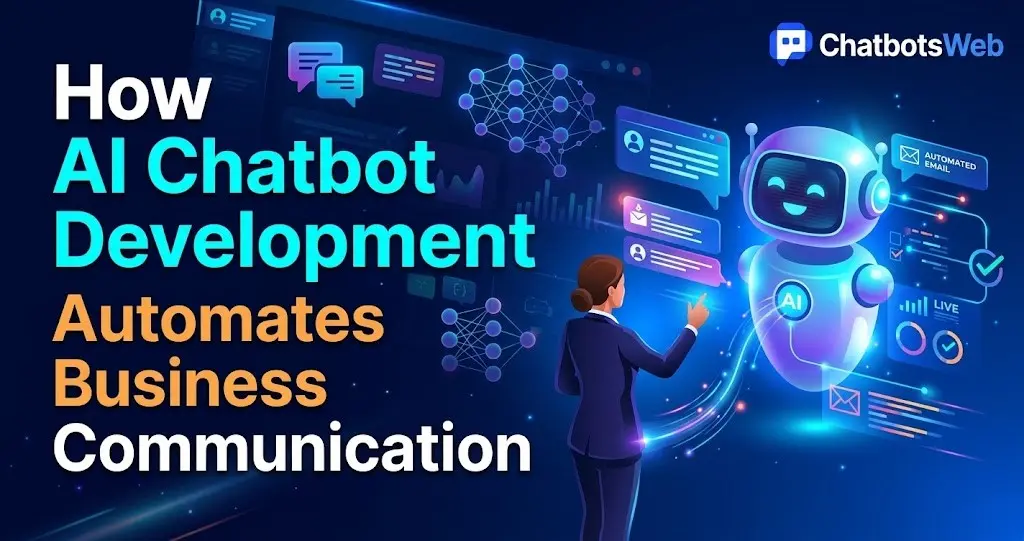
AI chatbot development helps businesses automate communication by using intelligent chat systems to answer customer questions, provide information, qualify leads, and support employees with routine tasks. Instead of relying entirely on manual responses, companies can use AI-powered chatbots to manage common inquiries, deliver faster assistance, and maintain consistent communication across digital channels. This approach helps organizations improve efficiency while meeting growing customer expectations.
Modern chatbots combine Conversational AI, Live chat automation, and Conversational marketing to create more responsive customer experiences. These technologies allow businesses to understand user intent, provide relevant information, and guide customers toward appropriate actions. By integrating AI chatbots into websites, messaging platforms, and customer support systems, organizations can reduce repetitive workloads, improve response times, and build stronger relationships with customers.
What Is AI Chatbot Development?
AI chatbot development is the process of designing, building, and integrating chatbots that use artificial intelligence to communicate with users. These systems can interpret messages, identify user intent, retrieve relevant information, and generate responses based on their capabilities. Businesses use AI chatbots to support customer service, marketing, sales, and internal communication while reducing dependence on manual interactions.
How AI Chatbots Understand Customer Questions
AI chatbots use technologies such as natural language processing and machine learning to interpret user messages. Depending on their design, they can recognize keywords, understand conversational context, and identify what a customer wants to accomplish. This enables them to provide more relevant answers than basic rule-based systems, although complex or ambiguous requests may still require clarification or human assistance.
Why Businesses Need Automated Communication
As businesses grow, the number of customer inquiries, internal requests, and service interactions often increases. Managing every conversation manually can create delays, inconsistent answers, and higher operational costs. Automated communication helps businesses handle routine requests efficiently while allowing employees to focus on complex problems, relationship management, and decisions that require human judgment.
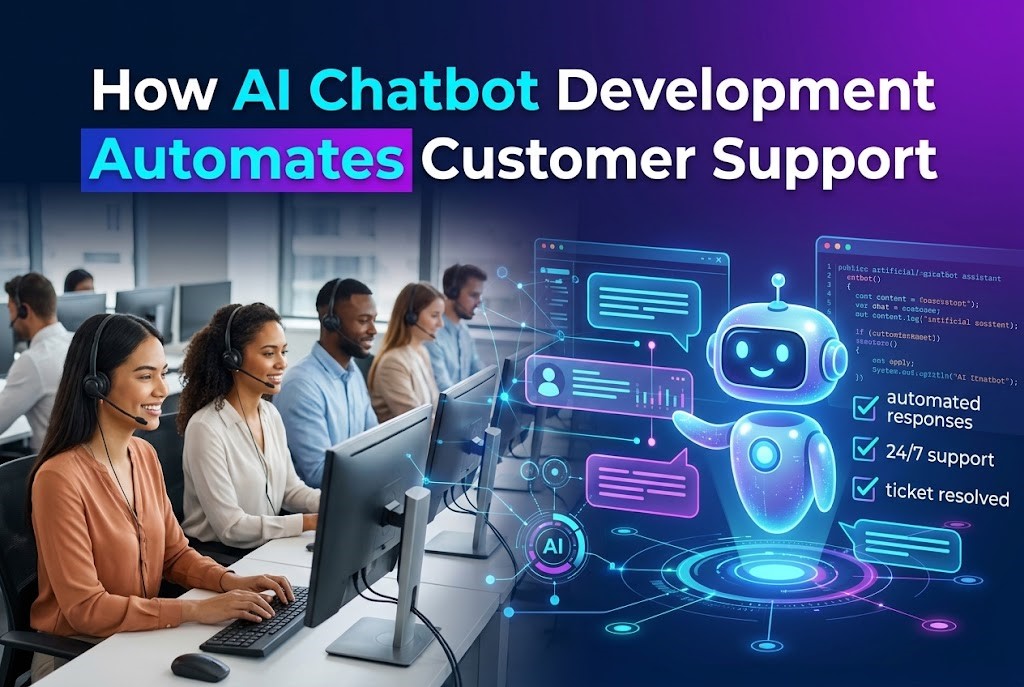
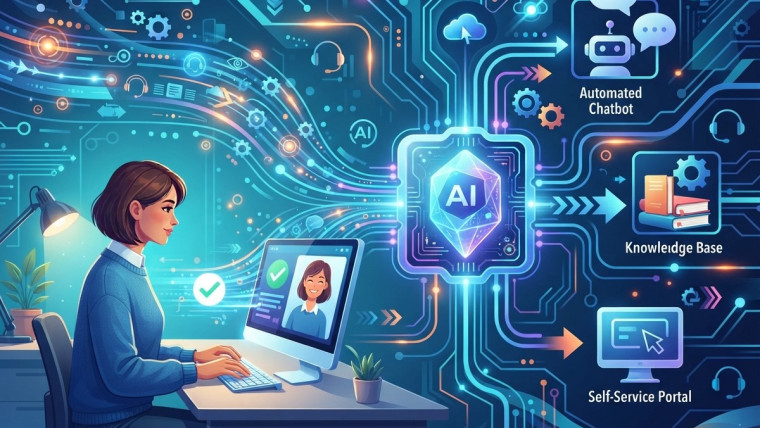
How AI Chatbot Development Automates Customer Support
Automating Frequently Asked Questions
Many customer inquiries involve recurring topics such as pricing, business hours, delivery policies, account access, and service availability. AI chatbots can answer these questions using approved information from company resources. Providing immediate answers reduces repetitive work for support agents and helps customers find information more conveniently. Businesses should regularly review chatbot responses to ensure information remains accurate and up to date.
Providing Support Beyond Business Hours
Customers may need assistance outside standard working hours, especially when businesses serve audiences across different time zones. AI chatbots can respond to routine questions at any time, helping customers access basic information without waiting for an employee. When a request requires additional attention, the chatbot can collect relevant details and direct the conversation to an appropriate team for follow-up.
The Role of Conversational AI in Business Communication
Conversational AI enables chatbots to interpret natural language and respond in ways that feel more flexible than traditional scripted conversations. It may combine natural language processing, machine learning, language models, and contextual information to support more useful interactions. Businesses can apply these capabilities to customer service, sales inquiries, appointment scheduling, and internal assistance while maintaining appropriate controls over accuracy and data handling.
Understanding User Intent and Context
A customer may ask the same question in several different ways, making rigid keyword-based responses insufficient for many situations. Conversational AI helps chatbots recognize the underlying intent behind different messages and select relevant responses. Context-aware systems can also use information from earlier messages in a conversation, reducing the need for customers to repeat themselves unnecessarily.
Delivering More Personalized Responses
AI chatbots can tailor responses using relevant information such as a customer’s stated preferences, previous interactions, or current support request. For example, a chatbot may guide a returning customer toward an appropriate troubleshooting resource based on the issue described. Personalization should be transparent and privacy-conscious, with access to customer information limited to what is necessary for the intended interaction.
How Live Chat Automation Improves Response Efficiency
Live chat automation combines chatbot technology with website messaging and customer support workflows. It can greet visitors, answer initial questions, collect relevant details, and route conversations to the correct department. This process reduces waiting times and helps support teams prioritize requests. When automated assistance is combined with human agents, businesses can maintain efficient communication without losing access to personal support.
Automatically Routing Customer Inquiries
Different inquiries often require different specialists. A billing question may belong to the finance team, while a technical issue may require assistance from customer support. Live chat automation can classify incoming messages and direct them to the appropriate team based on predefined rules or AI-supported intent recognition. Better routing reduces unnecessary transfers and helps customers reach relevant assistance more quickly.
Combining Chatbots With Human Support
Not every conversation can be resolved through automation. Sensitive complaints, complicated technical problems, and unusual requests may require empathy, investigation, or professional judgment. Businesses should allow chatbots to transfer conversations to human agents when necessary and provide agents with useful conversation history. This combination creates a more balanced support system that uses automation for routine work and human expertise for complex situations.
Using Conversational Marketing to Generate Leads

Qualifying Leads Through Automated Conversations
AI chatbots can ask relevant questions about a visitor’s needs, budget, goals, or preferred service. Based on the answers, they can categorize inquiries and forward promising leads to the sales team. This process reduces manual qualification work and helps sales representatives prioritize relevant opportunities. Businesses should keep questions concise and explain why information is being requested to maintain a positive user experience.
Guiding Customers Toward Relevant Actions
Chatbots can help customers take the next step by directing them to product pages, explaining service packages, scheduling consultations, or providing contact options. These guided conversations can reduce confusion and help visitors find suitable information without navigating multiple pages. Effective chatbot interactions should focus on customer needs rather than pushing every visitor toward an immediate purchase.
Integrating AI Chatbots With Business Systems
Integrating AI chatbots with existing business systems allows organizations to automate more than basic messaging. Connections with customer relationship management platforms, help desk software, scheduling tools, and order management systems can help chatbots retrieve relevant information and trigger approved actions. Proper integration reduces manual data entry, improves coordination between departments, and creates more connected communication workflows.
Connecting Chatbots With CRM Platforms
Customer relationship management systems store information about leads, customers, sales opportunities, and previous interactions. When connected appropriately, an AI chatbot can record inquiries, update lead details, and make relevant information available to authorized employees. This integration helps teams maintain better records and follow up more consistently. Businesses must establish suitable access controls and ensure that customer information is handled securely.
Automating Appointments and Transaction Updates
Chatbots can support appointment scheduling, booking confirmations, order status inquiries, and reminder messages when integrated with compatible systems. Customers can complete routine actions through a conversation instead of waiting for an employee to respond. These capabilities can reduce administrative workloads and improve convenience, provided the chatbot checks current information and confirms important actions accurately before communicating completion.
Benefits of AI Chatbot Development for Businesses
Reducing Communication Costs and Manual Work
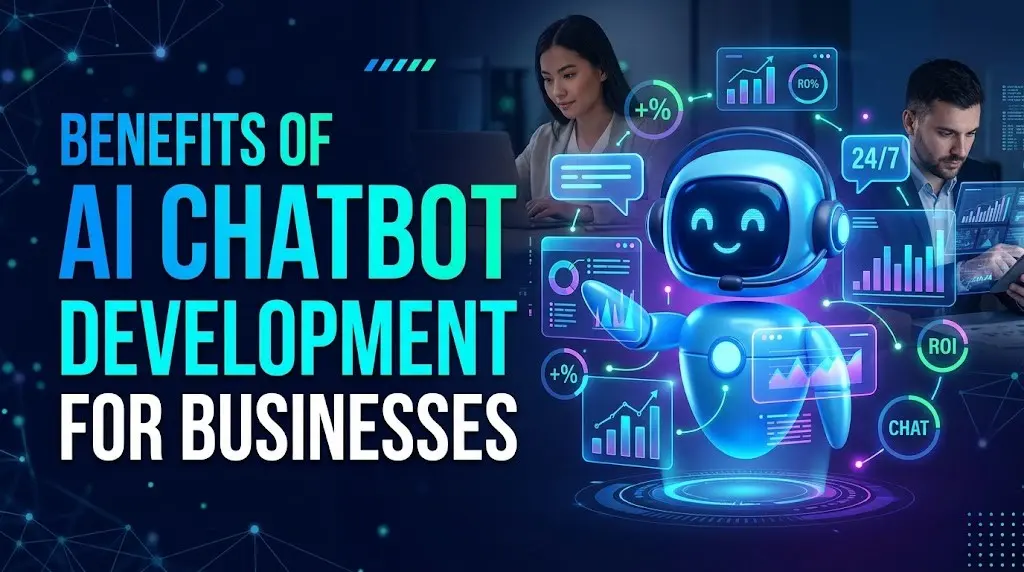
Automating repetitive inquiries can reduce the amount of time employees spend answering identical questions or collecting basic information. Support teams can then dedicate more attention to cases that require investigation or personalized assistance. While chatbot development and maintenance involve costs, well-designed automation may improve resource utilization when the system handles enough suitable interactions reliably.
Improving Communication Consistency
Human teams may provide slightly different answers to similar questions, particularly when policies or procedures are complex. A chatbot using approved company information can help deliver more consistent responses across customer interactions. Businesses should review its knowledge sources and update responses whenever products, prices, policies, or services change. Consistency depends on accurate information rather than automation alone.
Challenges and Best Practices in AI Chatbot Development
AI chatbots can create communication problems when they misunderstand requests, provide inaccurate answers, or make it difficult for customers to reach a human. Businesses should define the chatbot’s purpose, use reliable information sources, protect customer data, and test conversations before deployment. Ongoing monitoring helps organizations identify weaknesses and improve performance as customer expectations and operational requirements change.
Preventing Inaccurate or Misleading Responses
AI systems may occasionally generate incorrect information or misunderstand a customer’s intent. Businesses can reduce this risk by grounding responses in approved content, restricting sensitive actions, and directing uncertain questions to human agents. Important information involving payments, policies, or account changes should receive appropriate verification. Regular testing and clear escalation rules help maintain trust and reduce avoidable mistakes.
Protecting Customer Privacy and Information
Chatbots may process names, contact details, account information, and other sensitive data during conversations. Businesses should collect only necessary information, explain relevant data practices, restrict system access, and use suitable security controls. They should also assess how chatbot providers store and process information. Responsible data management helps protect customers while supporting reliable and trustworthy automated communication.
Conclusion
AI chatbot development helps businesses automate communication by combining intelligent responses, Live chat automation, Conversational AI, and Conversational marketing. These capabilities enable organizations to answer routine questions, provide support outside business hours, qualify leads, and connect customer conversations with essential business systems.
Successful implementation requires more than choosing an AI tool. Businesses must identify suitable use cases, maintain accurate information, protect customer data, and provide smooth access to human assistance when needed. By monitoring performance and improving the system over time, organizations can reduce repetitive work, improve customer experiences, and build a more efficient communication strategy.
Frequently Asked Questions
1. What is AI chatbot development?
AI chatbot development is the process of creating intelligent chat systems that interpret user messages and respond using artificial intelligence. Businesses use these chatbots to automate customer support, answer questions, generate leads, and improve communication efficiency.
2. How do AI chatbots automate business communication?
AI chatbots automate communication by answering common questions, collecting customer information, routing inquiries, scheduling appointments, and providing updates. They reduce manual work while allowing employees to focus on complex requests and important business decisions.
3. What is Conversational AI?
Conversational AI is a technology approach that enables computer systems to understand and respond to human language. It supports chatbots and virtual assistants that interpret user intent, maintain conversational context, and provide relevant information.
4. What is Live chat automation?
Live chat automation uses chatbots and automated workflows to manage website conversations. It can greet visitors, answer common questions, collect details, and route inquiries to the right team or human agent.
5. How does Conversational marketing help businesses?
Conversational marketing uses interactive conversations to engage potential customers, answer questions, qualify leads, and guide people toward relevant products or services. It helps businesses create more responsive experiences throughout the customer journey.
6. Can AI chatbots replace human customer support agents?
AI chatbots can handle many routine inquiries, but they cannot reliably replace human agents in every situation. Complex complaints, sensitive issues, and decisions requiring empathy or judgment often need human involvement. A combined approach is usually more effective.
7. Which business systems can integrate with AI chatbots?
AI chatbots can integrate with compatible CRM platforms, help desk systems, appointment scheduling tools, e-commerce platforms, and order management software. The available integrations depend on the chatbot platform and the business’s technical requirements.
8. Are AI chatbots suitable for small businesses?
Yes, small businesses can use AI chatbots to answer frequently asked questions, collect leads, provide basic customer support, and manage appointment requests. Starting with a few clearly defined tasks can make implementation more manageable.
9. What challenges can businesses face with AI chatbot development?
Common challenges include inaccurate responses, integration difficulties, privacy concerns, limited conversational understanding, and customer frustration when human support is unavailable. Testing, reliable information sources, security controls, and clear escalation procedures can reduce these risks.
10. How can businesses measure AI chatbot performance?
Businesses can track response time, resolution rate, customer satisfaction, lead conversion rate, escalation frequency, and cost per interaction. Reviewing these metrics regularly helps identify improvements and determine whether chatbot automation is delivering meaningful business value.



How AI Chatbot Development Automates Business Communication
How AI Virtual Assistants Improve Time Management
How Business Chatbots Reduce Customer Support Workloads
How Lead Generation Chatbots Improve Sales Opportunities