
Chatbot data privacy has become an essential concern for businesses that use automated communication to interact with customers. Modern chatbots collect and process information to answer questions, recommend products, provide customer support, and simplify online transactions. However, when customers share personal details through chatbot conversations, they expect businesses to handle their information responsibly. Poor privacy practices can damage customer confidence, expose sensitive information, and create compliance risks.
Businesses can strengthen customer trust by implementing transparent data collection policies, secure storage practices, access controls, and responsible information processing procedures. Whether a company uses an AI virtual assistant for customer service or advanced Chatbot technology to automate business operations, protecting customer information should remain a priority. Proper Chatbot integration also requires businesses to evaluate third-party platforms, understand how data moves between systems, and establish clear privacy safeguards. By adopting effective privacy strategies, organizations can deliver convenient chatbot experiences while protecting customer rights and maintaining long-term relationships.
Understanding Chatbot Data Privacy
Chatbot data privacy refers to the practices and policies used to protect personal information collected, processed, stored, or shared during chatbot interactions. This information may include names, email addresses, contact details, purchase histories, support requests, and other sensitive information customers voluntarily provide. Understanding these data flows helps businesses identify privacy risks and develop safeguards that protect users throughout their chatbot experience.
Types of Information Chatbots Collect
Chatbots may collect different categories of information depending on their purpose and configuration. A customer service chatbot might process order numbers, account details, and support messages, while a sales chatbot may collect contact information and product preferences. Some systems also process conversation histories and technical information. Businesses should determine which data is genuinely necessary before collecting or processing it.
Why Customer Privacy Matters
Customers are more likely to interact confidently with businesses when they understand how their information will be handled. Unclear privacy practices can discourage users from sharing necessary details or continuing conversations. Strong privacy protections demonstrate accountability, reduce unnecessary exposure, and help organizations establish reliable digital communication experiences that support customer satisfaction and long-term trust.
Establish Transparent Data Collection Policies

Explain Data Collection Purposes
Every chatbot should have a clearly defined reason for collecting customer information. For example, an online store may request an order number to check delivery status, while a support chatbot may need an email address to create a service ticket. Explaining these purposes helps customers understand why particular details are requested and reduces concerns about unnecessary data collection.
Obtain Appropriate Consent
Businesses should provide appropriate consent mechanisms when required by applicable privacy laws or when processing activities call for user permission. Customers should be able to understand what they are agreeing to before providing information. Consent requests should be specific and understandable, and businesses should respect applicable withdrawal rights. A chatbot should not pressure users into sharing unnecessary personal details.
Protect Customer Information With Strong Security Measures
Privacy policies alone cannot protect customer information without effective technical safeguards. Businesses should implement security controls that prevent unauthorized access, reduce data exposure, and protect information throughout its lifecycle. These measures should cover chatbot interfaces, connected applications, databases, administrative tools, and third-party services. Regular security assessments can help organizations identify weaknesses before they cause serious problems.
Use Encryption and Secure Connections
Encryption helps protect information from unauthorized access when data is transmitted or stored. Businesses should use secure communication protocols, such as HTTPS with modern TLS configurations, and apply appropriate encryption to stored information where necessary. Encryption keys should be managed securely, and access to sensitive records should remain restricted to authorized systems and personnel.
Apply Strong Authentication and Access Controls
Not every employee or application needs access to complete chatbot conversations. Role-based access controls can limit information access according to job responsibilities. Strong authentication, multifactor authentication, and regular permission reviews can further reduce risks associated with compromised accounts. Businesses should also maintain appropriate access logs to investigate suspicious activity and support accountability.
Implement Data Minimization and Retention Controls
Collect Only Necessary Information
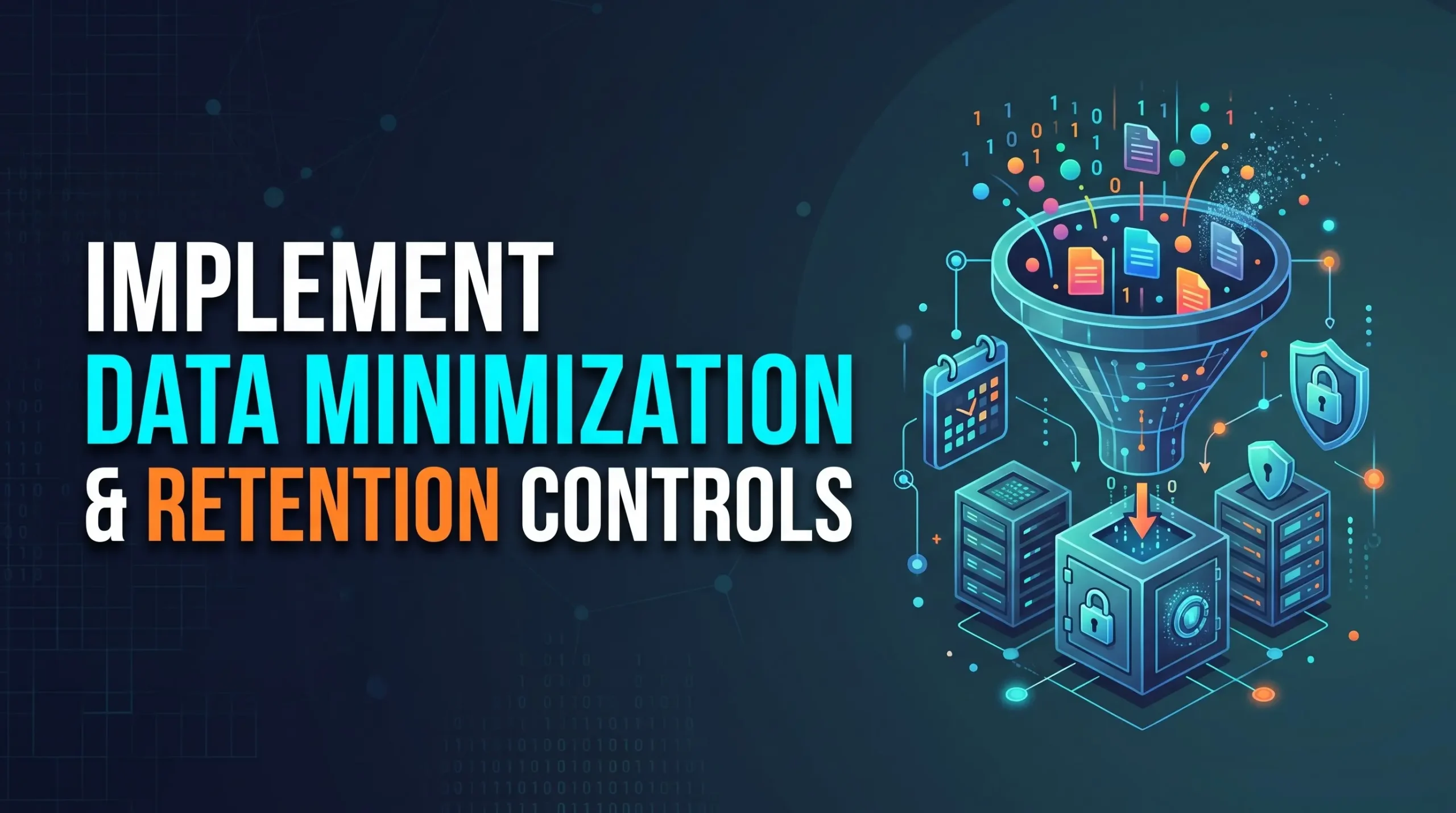
Businesses should evaluate every field and question included in a chatbot conversation. If a customer only needs general product information, the chatbot usually does not need an address, phone number, or account password. Reducing unnecessary collection makes interactions simpler and limits privacy risks. Sensitive information should only be requested when there is a legitimate need and suitable protection.
Establish Clear Data Deletion Policies
Businesses should define how long chatbot conversations, customer records, and diagnostic logs are retained. Information should be deleted or anonymized when it is no longer required, subject to applicable legal, security, and business obligations. Customers should also receive clear information about relevant deletion rights and available procedures. Automated retention policies can help organizations apply these rules consistently.
Choose Secure Chatbot Technology
Selecting reliable Chatbot technology is an important step in protecting customer information. Businesses should evaluate security capabilities, data processing practices, hosting arrangements, retention policies, and available privacy controls before adopting a chatbot platform. A suitable solution should support business requirements without collecting excessive information or creating unnecessary risks for customers and employees.
Evaluate Provider Privacy Practices
Before selecting a chatbot provider, businesses should review its privacy documentation, security measures, subprocessors, and data retention policies. They should understand whether conversation data is used to train models, whether information is transferred across borders, and which controls are available to prevent inappropriate access. Contracts should clearly establish the provider’s responsibilities for protecting customer information.
Understand AI Processing Risks
An AI virtual assistant may process natural-language messages, conversation history, and contextual information to generate responses. Depending on the system, data may be handled by external models or supporting services. Businesses should understand these processing arrangements and avoid submitting sensitive information unless the service is appropriate for that data and suitable protections are in place.
Secure Chatbot Integration With Business Systems
Effective Chatbot integration connects automated communication with business tools such as customer relationship management platforms, payment systems, booking software, and support databases. These connections can improve efficiency, but they also introduce additional privacy risks. Businesses should evaluate every integration, limit the information exchanged, and establish appropriate safeguards to prevent unauthorized access or accidental disclosure.
Limit API Access and Permissions
Application programming interfaces allow chatbots to exchange information with external systems. Businesses should use secure authentication, restrict API permissions, and avoid granting broader access than necessary. API credentials should be stored securely and rotated according to an appropriate policy. Monitoring requests and reviewing integration permissions can help identify suspicious activity and reduce potential exposure.
Protect Third-Party Data Transfers
When chatbot information moves between different platforms, businesses should understand which systems receive the data and why. Third-party integrations should be assessed for security, privacy, and compliance requirements. Data-sharing agreements, appropriate contractual safeguards, and documented processing responsibilities help clarify how information must be protected throughout the connected environment.
Prevent Sensitive Information From Appearing in Chatbot Responses
Chatbots must be designed to avoid revealing private information to unauthorized users. A system that accesses customer records may accidentally disclose personal details if identity verification and response controls are inadequate. Businesses should implement safeguards that ensure users receive only information they are authorized to access, particularly when chatbot conversations involve accounts, transactions, or confidential support requests.
Verify User Identity Before Sharing Account Details
A chatbot should not disclose account information simply because someone provides a name or email address. Businesses should use appropriate identity verification before displaying order histories, account details, or other protected information. The verification method should match the sensitivity of the requested data, and authentication secrets should never be unnecessarily repeated or exposed in chatbot responses.
Test Responses for Privacy Risks
Regular testing can reveal whether a chatbot exposes confidential information, follows malicious instructions, or retrieves data belonging to another user. Businesses should evaluate prompt injection risks, unauthorized data retrieval, and inappropriate disclosure scenarios. Testing should use controlled environments and suitable sample data. Findings should lead to documented improvements in system instructions, permissions, retrieval controls, and response validation.
Follow Applicable Data Protection Requirements
Understand Relevant Privacy Laws
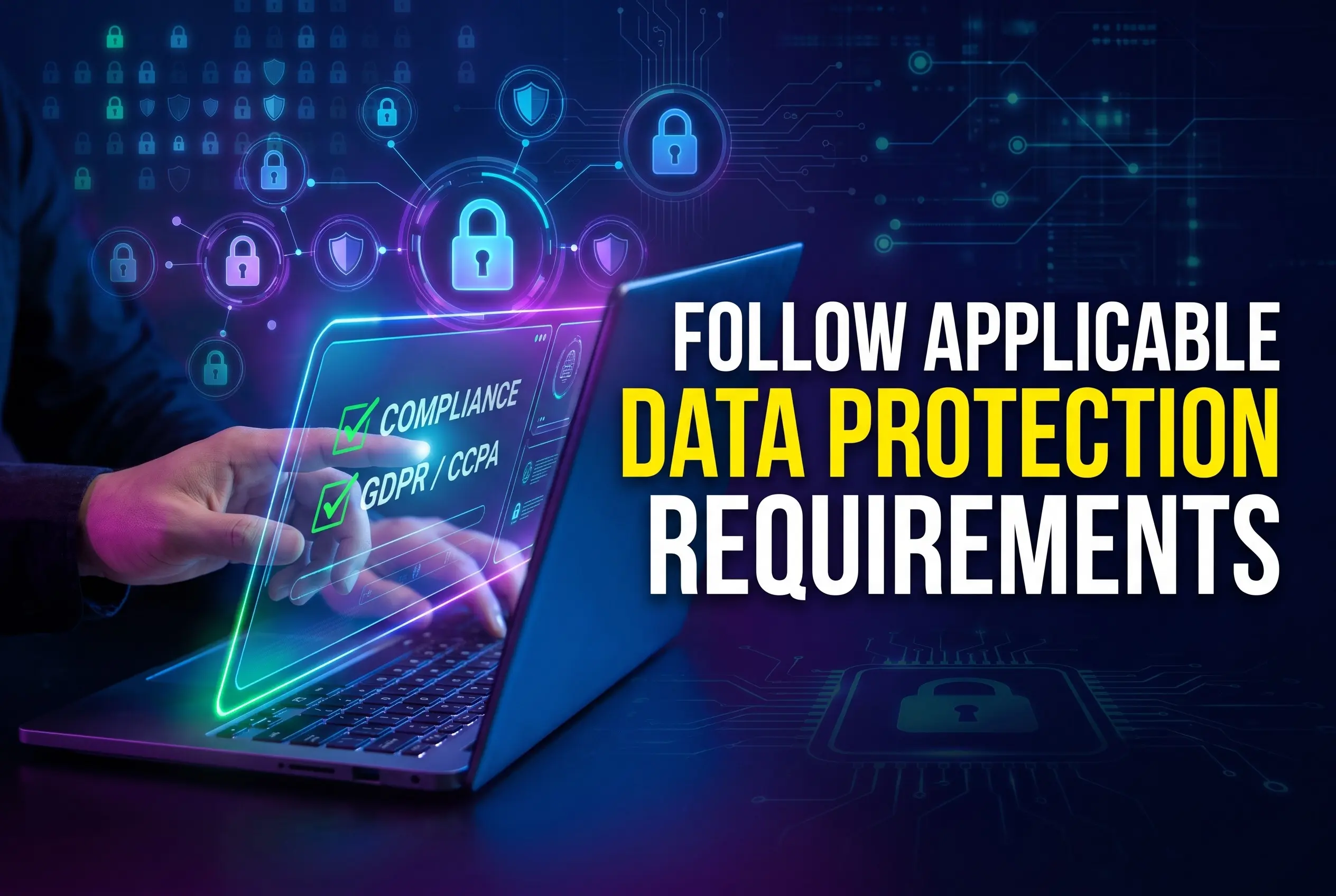
Depending on the circumstances, businesses may need to consider regulations such as the General Data Protection Regulation in the European Union or applicable state privacy laws in the United States. Organizations serving customers in other jurisdictions should assess their local requirements as well. Legal obligations can involve lawful processing, transparency, security, retention, and responding to data subject requests.
Maintain Documentation and Accountability
Businesses should document chatbot data flows, processing purposes, security measures, retention schedules, and third-party relationships. Regular reviews can help confirm that actual system behavior matches published privacy commitments. Where required, organizations should also conduct appropriate privacy impact assessments and establish procedures for handling customer requests, security incidents, and regulatory obligations.
Monitor Chatbot Privacy and Respond to Incidents
Privacy protection requires continuous monitoring because chatbot systems, integrations, and threats can change over time. Businesses should review security logs, investigate unusual activity, and regularly assess whether existing controls remain effective. A clear incident response process helps organizations contain problems, investigate their causes, and communicate responsibly when customer information may have been exposed.
Conduct Regular Privacy Audits
Privacy audits help businesses identify outdated permissions, excessive data retention, insecure integrations, and gaps in documented procedures. Reviews should cover chatbot configurations, connected services, data storage, and administrative access. Organizations should also reassess their systems after significant software updates or changes to data processing arrangements to ensure that safeguards remain appropriate.
Develop an Incident Response Plan
An incident response plan should define responsibilities for detecting, investigating, containing, and resolving privacy or security incidents. Teams should know how to preserve relevant evidence, assess potential data exposure, and follow applicable notification requirements. Practicing response procedures can improve readiness and reduce confusion when a real incident occurs.
Conclusion
Chatbot data privacy is essential for businesses that want to provide convenient digital communication while maintaining customer confidence. Transparent policies, appropriate consent, encryption, limited data collection, secure integrations, and regular testing can significantly improve how organizations protect customer information. Businesses should also evaluate their technology providers and establish clear procedures for handling security incidents.
Whether an organization uses an AI virtual assistant for customer support or advanced Chatbot technology for sales and service automation, privacy must remain part of the entire system design. Secure Chatbot integration and responsible information management help businesses reduce unnecessary risks and create more reliable customer experiences. By treating privacy as an ongoing responsibility rather than a one-time technical task, organizations can strengthen trust and support sustainable digital growth.
Frequently Asked Questions
1. What is chatbot data privacy?
Chatbot data privacy refers to the policies and practices used to protect personal information collected or processed during chatbot interactions. It includes responsible data collection, secure storage, access restrictions, transparency, and appropriate deletion procedures.
2. Why is chatbot data privacy important for businesses?
It helps protect customer information, reduce unauthorized access, and maintain trust. Strong privacy practices can also support compliance with applicable data protection requirements and encourage customers to interact more confidently with digital services.
3. What types of information can chatbots collect?
Chatbots may collect names, email addresses, contact details, support messages, purchase information, and conversation histories. The information collected depends on the chatbot’s purpose and configuration, and businesses should avoid requesting unnecessary personal details.
4. How can businesses make chatbot conversations more secure?
Businesses can use encryption, strong authentication, role-based access controls, secure integrations, and regular security testing. They should also restrict sensitive data collection and establish clear procedures for monitoring and responding to security incidents.
5. Is an AI virtual assistant safe for sharing personal information?
An AI virtual assistant can be appropriate for certain personal information when its provider offers suitable privacy and security protections. Users should understand the system’s data handling practices and avoid sharing passwords, payment credentials, or unnecessary sensitive information.
6. How does chatbot integration affect data privacy?
Chatbot integration may transfer customer information between the chatbot and external systems. Businesses should restrict permissions, secure API connections, evaluate third-party providers, and ensure that data transfers follow applicable privacy and security requirements.
7. Can chatbot technology store customer conversations?
Yes, some Chatbot technology platforms store conversation histories for support, analytics, or service improvement. Storage practices vary by provider, so businesses should review retention settings, access controls, and whether conversations are used for model training.
8. What is data minimization in chatbot privacy?
Data minimization means collecting only the information necessary for a specific purpose. It reduces unnecessary exposure and can simplify chatbot interactions by preventing the collection of personal details that are not required to deliver the requested service.
9. How often should businesses review chatbot privacy settings?
Businesses should review privacy settings regularly and whenever significant changes occur to chatbot software, integrations, data processing, or applicable legal requirements. Continuous monitoring and periodic audits help identify risks and maintain effective safeguards.
10. How does chatbot data privacy build customer trust?
Transparent data practices show customers that their information is handled responsibly. When businesses explain how information is used, protect sensitive details, and respect customer choices, they create more reliable experiences that can strengthen confidence in the brand.



Chatbot Data Privacy Strategies to Strengthen Customer Trust
AI Chatbot Security Strategies to Protect Customer Information
How Omnichannel Chatbot Solutions Drive Customer Engagement
AI Chatbot Personalization for Smarter Customer Interactions