
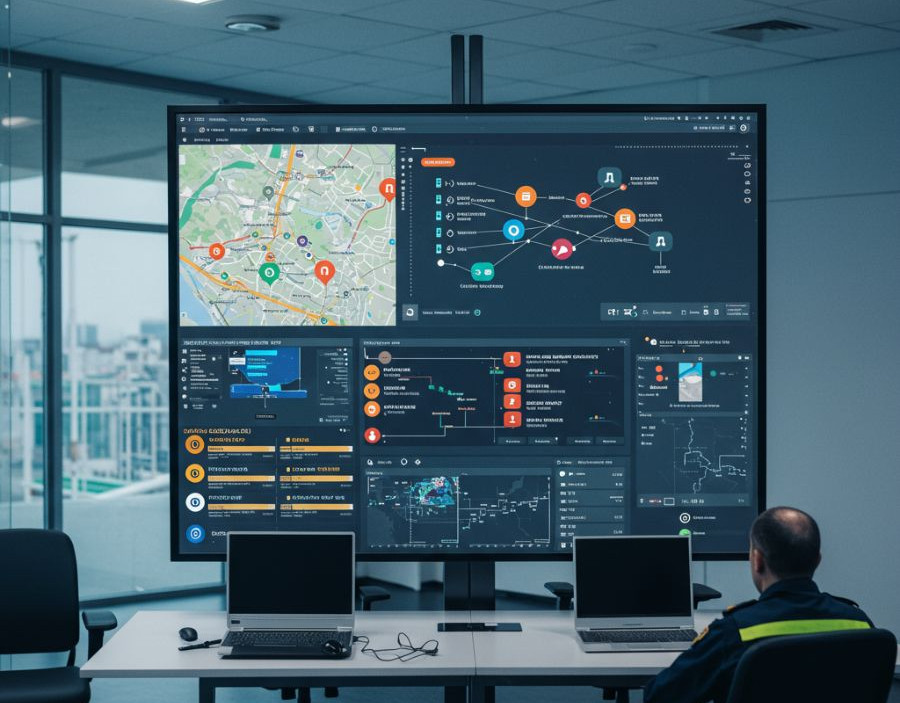
Natural disasters, industrial accidents, and public health emergencies are rising, increasing the need for fast and reliable support during emergency situations. Traditional communication channels often fail or get overloaded, slowing down the delivery of critical help. Today, AI-driven emergency response chatbots are transforming crisis management by providing real-time updates, automated guidance, and instant access to emergency resources.
Organizations across sectors—healthcare, nonprofit groups like Direct Relief, and global disaster agencies—are adopting innovative chatbot solutions to streamline field operations and improve public safety. Advanced platforms such as the ERMES chatbot and ETC chatbot show how AI can strengthen coordination, enhance disaster communication, and support communities when they need it most. By improving response speed and reducing operational bottlenecks, AI-powered emergency systems help save valuable time—and lives—during critical moments.
What Are Emergency Response Chatbots?
Emergency response chatbots are AI tools made to help during emergencies. They give real-time support through text or voice on websites, apps, social media, and messaging platforms. These bots are different from normal customer service chatbots. They connect with emergency data feeds, GIS maps, and crisis management systems. This helps them share accurate alerts, safety steps, and important updates.
Tools like the ERMES chatbot, ETC chatbot, and other chatbot solutions are used in healthcare, government, and nonprofit groups such as Direct Relief. They can guide people to evacuation routes, show nearby shelters, or connect them to medical help. They can also help first responders get the right information fast. These AI-driven systems work 24/7 and make emergency response quicker and easier during critical moments.
Benefits of an Emergency Response Chatbots

Emergency response chatbots use AI-driven, AI-powered, and Generative AI technology to make communication faster during emergency situations. They share real-time updates, guide people with safety steps, and remove delays that often happen in a crisis. These chatbot solutions help improve crisis management across government, healthcare, and nonprofit organizations.
They also support responders with instant coordination. With the help of artificial intelligence, chatbots can track supplies, gather reports, and share important data. Groups like Direct Relief use these tools to manage disaster support and deliver fast, accurate information to affected communities.
Key Benefits
-
Instant Information Dissemination: Sends alerts, weather updates, and safety instructions to large groups quickly, even when phone lines or networks fail.
-
24/7 Availability: Works all day and night, providing nonstop support during long emergencies.
-
Multilingual Support: Uses NLP and Generative AI to communicate in many languages and reach diverse communities.
-
Resource Coordination: Tracks supplies, assigns staff, and manages volunteers in real time for smoother crisis operations.
-
Data Collection and Analytics: Gathers reports on casualties, damage, and citizen needs. This helps teams make better decisions. It can also work as a health chatbot or medical chatbot during health crises.
Use Cases of Emergency Response Chatbots
Emergency response chatbots are being used in many sectors to handle emergency situations efficiently. These AI-powered chatbot solutions help organizations improve crisis management and respond faster to disasters. They provide real-time guidance, resource coordination, and accurate updates when every second counts.
Key Use Cases
-
Natural Disasters: During hurricanes, earthquakes, or wildfires, chatbots share evacuation routes, shelter locations, and live weather updates to keep communities safe.
-
Public Health Crises: In pandemics or outbreaks, chatbots handle symptom checks, vaccination scheduling, and public health advisories, reducing pressure on healthcare hotlines.
-
Industrial Accidents: Factories and chemical plants use chatbots to alert staff, guide evacuations, and coordinate with emergency responders.
-
Terrorist Incidents: Security agencies use chatbots to guide civilians to safe areas, share threat updates, and collect eyewitness reports.
Designing Effective Emergency Response Chatbots
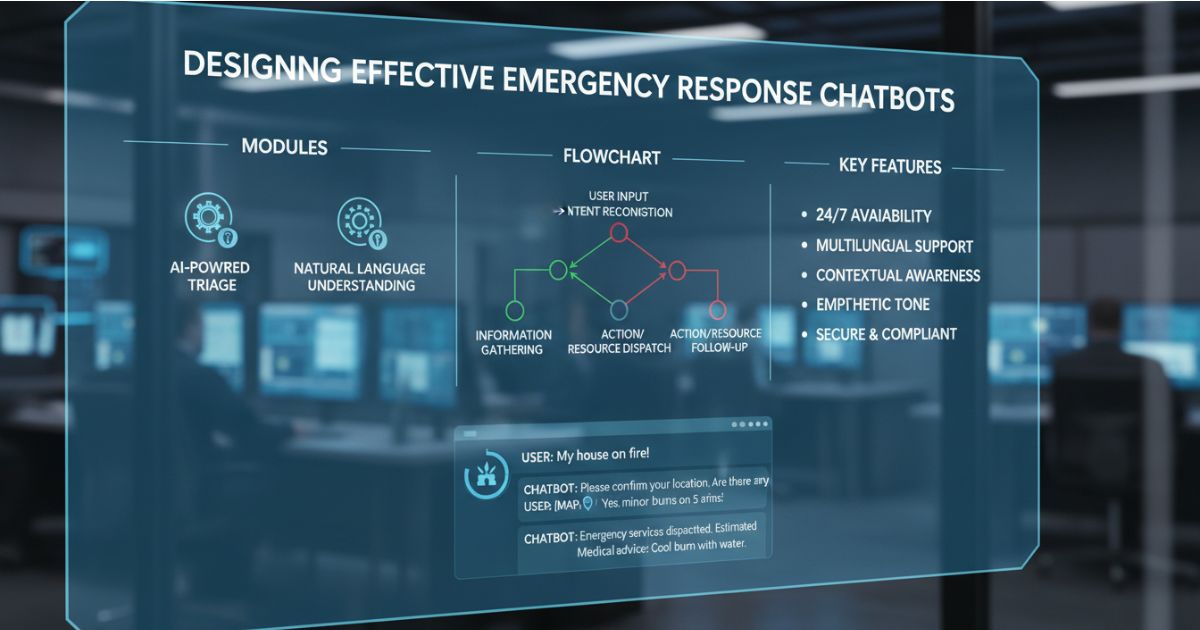
Creating an AI-powered chatbot solution for crisis management requires careful planning and real-world knowledge. These Generative AI tools must work reliably in emergency situations to provide fast, accurate guidance. Nonprofits, healthcare teams, and organizations like Direct Relief use ERMES chatbot, ETC chatbot, and other solutions to support communities during disasters.
Effective chatbots can also function as a health chatbot or medical chatbot during public health crises. They should combine artificial intelligence, robust technology, and thoughtful Chatbot UI Design for Engagement to improve response times, make interactions intuitive, and save lives.
Key Design Considerations
-
Accurate NLP Models: Train chatbots on crisis-specific words, local dialects, and technical jargon to ensure correct understanding even under stress.
-
Context Awareness: Keep session history so the bot can adapt responses based on location, reported conditions, and prior interactions.
-
Fail-Safe Escalations: Set triggers to hand queries over to human operators if AI confidence is low or in life-critical situations.
-
Offline Functionality: Cache essential data and deploy via SMS or USSD for areas with weak or no internet.
-
User-Centric UX: Simplify the interface, minimize typing, and use quick-reply buttons. Focus on Chatbot UI Design for Engagement to keep users engaged and reduce stress during emergencies.
These AI-driven chatbots are vital tools for healthcare, nonprofit, and government organizations. They enhance crisis management, improve emergency response, and ensure communities get timely support in emergency situations.
Integration with Existing Emergency Systems

To be most effective, AI-driven and AI-powered chatbot solutions should connect smoothly with existing emergency management platforms, GIS mapping tools, and team communication apps. Using RESTful APIs and standard formats like CAP (Common Alerting Protocol) allows chatbots to receive real-time alerts from multiple sources.
Two-way integration is important. Responders can send updates—such as resource deployments, incident status, or clearance—back into the chatbot. This keeps citizens informed and ensures everyone in the response team has the same situational awareness. Organizations, including healthcare, nonprofit groups, and disaster agencies like Direct Relief, can use tools like ERMES chatbot and ETC chatbot to improve coordination during emergency situations.
Ensuring Data Security and Privacy
Emergency response chatbots handle sensitive personal and location data. They must use strong security measures to protect this information. Data should be encrypted both at rest and in transit. Access controls should be strict, and user inputs should be anonymized whenever possible.
Compliance with rules like GDPR, HIPAA, or local privacy laws is essential, especially for healthcare, medical chatbots, and health chatbots used across borders. Regular security audits and penetration testing help keep the system safe. Using AI-driven chatbot solutions responsibly builds trust and ensures that emergency situations are handled securely.
Overcoming Common Challenges
Using chatbots in emergency situations can face many challenges. Network outages, power failures, and misinformation can disrupt service.
To overcome this, AI-driven and AI-powered chatbot solutions use multiple channels like SMS, voice, and app push notifications. Offline data syncing ensures information is available even without internet. Human moderation can help stop rumors, and fallback scripts cover known failure situations. Continuous training with real incident data helps Generative AI chatbots, ERMES chatbot, and ETC chatbot improve over time. These steps make crisis management faster and more reliable for healthcare, nonprofit, and disaster response teams.
Real-World Success Stories
Many organizations have shown the power of AI-driven chatbot solutions in emergency situations.
In 2022, a coastal city used a Generative AI chatbot during a major hurricane. The bot handled 80% of routine citizen questions, freeing call centers for urgent cases. During a wildfire, a regional agency used SMS chatbot solutions to guide evacuees to safe zones. This reduced congestion on evacuation routes by 30%.
In a pandemic, a health chatbot processed millions of symptom checks. This helped hospitals triage patients faster and reduced overload. Nonprofits and healthcare teams, including Direct Relief, also use ERMES chatbot, ETC chatbot, and other AI tools to improve crisis management and keep communities safe.
Preparing for Implementation: Steps to Deploy in Your Organization
Deploying an emergency chatbot requires careful planning to ensure it works effectively during crises. Following structured steps helps organizations implement AI-driven solutions smoothly.
-
Conduct a Needs Assessment: Involve emergency managers, IT teams, and field responders to identify requirements.
-
Define Use Cases and Success Metrics: Determine chatbot purposes, data sources, and how success will be measured.
-
Pilot the Chatbot: Test in a controlled environment to identify issues before full deployment.
-
Collect Feedback: Gather insights from staff and users to improve chatbot performance.
-
Train Staff on Escalation Workflows: Ensure team members know when and how to intervene.
-
Run Tabletop Drills: Simulate emergency scenarios to validate chatbot effectiveness.
-
Deploy AI Tools Effectively: Implement Generative AI chatbots to enhance crisis management in healthcare, nonprofit, and disaster response organizations.
Tools and Platforms
Many platforms make it easier to build AI-driven chatbot solutions for emergency situations.
Popular choices include:
-
Microsoft Bot Framework with Azure Maps integration
-
Google Dialogflow with Firebase Messaging
-
Open-source Rasa with customized GIS plugins
Cloud providers offer scalable infrastructure and built-in compliance certifications, which is important for healthcare and nonprofit organizations.
For SMS and voice channels, Twilio and Vonage APIs are widely used. They provide global reach, redundancy, and reliable delivery. Using these tools, organizations can create Generative AI chatbots that work effectively during crisis management and support real-time responses in emergency situations.
Future Trends and Innovations
The next generation of AI-powered chatbot solutions will use multimodal AI, combining text, voice, and computer vision. Chatbots may interpret images of damage or detect trapped individuals using drone feeds. Edge computing and mesh networks will help bots stay operational during network outages.
Predictive analytics will allow chatbots to anticipate crisis escalation and send preemptive alerts. As AI ethics frameworks improve, these systems will balance rapid response with privacy and fairness. This is important for healthcare, nonprofit, and disaster response teams managing emergency situations.
Measuring ROI and Performance Metrics
To evaluate chatbot effectiveness, track key performance indicators (KPIs) such as:
-
Reduced response times
-
Call center deflection rates
-
User engagement levels
-
Accuracy of information delivery
Organizations can quantify saved manpower hours, faster resource allocation, and even lives or assets preserved. Dashboard analytics allow teams to monitor metrics in real time and improve Generative AI chatbot conversation flows continuously. These measures help strengthen crisis management and optimize AI-driven chatbot solutions during emergency situations.
Dig Deeper: Measuring Chatbot Performance & How to Increase ROI Using Analytics
Conclusion
Emergency response chatbots are changing how organizations handle emergency situations. These AI-driven, AI-powered, and Generative AI tools provide scalable, reliable support when traditional communication channels are overloaded or fail.
By sending alerts, guiding citizens, and coordinating responders, chatbots improve situational awareness and speed up life-saving decisions. As technology evolves, healthcare, nonprofit, and disaster response organizations that adopt chatbot solutions will be better prepared to protect communities and manage future crises with confidence.
FAQs
What is an emergency response chatbot?
An emergency response chatbot is an AI tool that provides real-time help during disasters and crises through text or voice.
How do these chatbots help during emergencies?
They share alerts, guide people to safety, automate tasks, and connect users with resources quickly.
Can chatbots work all the time?
Yes, AI chatbots are available 24/7 and can handle multiple requests simultaneously.
Do chatbots support multiple languages?
Most modern chatbots can communicate in several languages to help diverse communities.
How do chatbots send alerts during network outages?
They can deliver messages via SMS, voice calls, or offline cached data when the internet is limited.
Are emergency chatbots safe to use?
Yes, if data is encrypted and privacy rules like GDPR or HIPAA are followed.
Can chatbots replace human responders?
No, they assist humans by handling routine tasks and providing information quickly.
Where are emergency chatbots commonly used?
They are used in natural disasters, public health emergencies, industrial accidents, and security incidents.
How do organizations measure chatbot effectiveness?
They track response times, user engagement, accuracy of information, and saved resources or lives.


Event Management Chatbots: Streamline Attendee Engagement
Ethical AI Chatbots: Ensuring Fairness & Transparency
Mental Health Chatbots: Benefits, Risks & Best Practices
Boost Chatbot IQ with Retrieval-Augmented Generation (RAG)