

In today’s digital landscape, businesses are under constant pressure to optimize operations and respond swiftly to market fluctuations. Central to this transformation is the rise of supply chain chatbots—AI-powered conversational agents that streamline logistics tasks, enhance decision-making, and provide real-time insights. These intelligent assistants bridge gaps between enterprise resource planning (ERP) systems, warehouse management platforms, and transportation management tools, empowering users across the supply chain with instant access to critical information. As competition intensifies and customer expectations evolve, organizations that harness the capabilities of supply chain chatbots gain a decisive edge.
Currently, these bots perform a wide range of functions: from querying live inventory levels and scheduling replenishments to managing exception handling and tracking shipments. By automating repetitive processes, supply chain chatbots free up human resources for strategic initiatives, driving efficiency and agility throughout the network. This year (2026), companies across industries are deploying conversational AI in their logistics operations, unlocking cost savings, reducing errors, and elevating service quality.
In this comprehensive article, we explore how supply chain chatbots work, highlight their key benefits, outline best practices for implementation, and examine strategies to overcome common challenges. Whether you are a supply chain director, an IT leader, or a process optimization specialist, understanding these innovations will be pivotal to achieving operational excellence. Read on to discover why supply chain chatbots are not just a trendy solution, but a fundamental tool for building resilient, transparent, and future-ready logistics systems.
Understanding Supply Chain Chatbots
Supply chain chatbots are specialized AI applications designed to facilitate seamless communication between stakeholders in logistics operations. Unlike generic customer service bots, these virtual assistants connect directly to back-end systems—such as ERP, warehouse management systems (WMS), and transportation management platforms (TMS)—to retrieve and update critical data instantly. They leverage advanced natural language understanding (NLU) to interpret queries, handle complex terminology, and respond in conversational formats that mimic a human expert.
Core Technologies Behind the Bots
At their foundation, supply chain chatbots employ machine learning algorithms that continuously improve through interaction data and feedback loops. Key components include:
- Natural Language Processing (NLP): Enables the bot to understand and generate human-like responses, even when faced with industry-specific jargon, SKU codes, or geographical queries.
- Integration APIs: Facilitate seamless data exchange between the chatbot engine and core enterprise systems, ensuring users receive real-time information on inventory, shipments, and orders.
- Analytics Modules: Capture interaction metrics, identify usage patterns, and provide insights for ongoing optimization of dialogue flows and user experience.
Typical Use Cases
Organizations are currently leveraging supply chain chatbots for a variety of tasks, including:
- Inventory Monitoring: Users can request real-time stock availability, trigger automatic restocking alerts, and refine reorder points based on predictive demand forecasting.
- Order Status Updates: Internal teams or end customers can inquire about shipment locations, estimated delivery windows, and proof-of-delivery documentation in seconds.
- Exception Management: When disruptions occur—such as delays, damages, or shortages—the chatbot notifies stakeholders immediately, suggests mitigation steps, and can initiate claims with carriers.
By consolidating these capabilities within a conversational interface, supply chain chatbots reduce manual intervention and accelerate decision-making across the network.
Real-Time Inventory and Order Tracking Capabilities

In today’s fast-paced marketplace, the ability to access up-to-date inventory and shipment data is crucial. Supply chain chatbots excel at providing these insights on demand, removing delays that traditionally hindered responsiveness. Whether a warehouse supervisor needs to confirm stock levels or a customer service agent requires proof of delivery, the chatbot delivers accurate answers instantly.
Live Inventory Queries
Through direct API integration with WMS and ERP systems, the chatbot fetches current stock quantities, identifies expiration dates for perishable goods, and highlights low-turn items. This functionality is especially invaluable for industries like pharmaceuticals, where expiration management and traceability are paramount. Users can also request historical consumption trends, enabling data-driven restocking decisions and reducing overstock risks.
Automated Order Tracking
By tapping into TMS data and carrier portals, supply chain chatbots aggregate tracking numbers, shipment milestones, and carrier updates. Stakeholders simply ask the bot for the latest status, and it delivers estimated arrival times, live location maps, and exception alerts. This capability not only enhances transparency but also reduces the volume of manual status inquiries handled by customer support teams.
Integration with Research and Best Practices
Leading research institutions emphasize the importance of real-time visibility in supply chain performance. According to studies from the MIT Center for Transportation & Logistics, organizations with complete end-to-end visibility experience up to 20% reduction in operational costs. Supply chain chatbots play a vital role in achieving that transparency by automating data retrieval and presenting information through intuitive conversational interfaces.
Benefits of AI-Driven Logistics Automations
The integration of supply chain chatbots delivers measurable value across multiple dimensions. By automating repetitive tasks and centralizing interactions, businesses can unlock significant efficiency gains and cost savings. Key benefits include:
24/7 Operational Support
Unlike human teams, chatbots remain available around the clock. They handle inquiries outside regular business hours, address urgent shipping issues, and provide continuous support to international operations spanning different time zones. This uninterrupted availability translates into faster response times and enhanced stakeholder satisfaction.
Cost Reductions and Resource Optimization
By offloading routine tasks—such as status checks, data entries, and standard reporting—supply chain chatbots allow organizations to redeploy personnel toward high-value initiatives. Studies by government agencies, including the U.S. Department of Transportation, highlight that process automation in logistics can reduce labor costs by up to 30% while maintaining service quality.
Improved Accuracy and Compliance
AI-driven validation mechanisms built into chatbots minimize human errors in data capture and order processing. By enforcing standardized inputs and verifying entries against system records, chatbots enhance data integrity, support traceability, and ensure compliance with industry regulations.
Scalability During Peak Demands
During seasonal spikes or promotional events, query volumes can surge dramatically. Supply chain chatbots scale seamlessly to handle thousands of simultaneous interactions, delivering consistent performance without requiring additional headcount.
Best Practices for Implementing Supply Chain Chatbots

Achieving a successful rollout of supply chain chatbots requires careful planning, cross-functional collaboration, and ongoing optimization. Consider these proven practices when embarking on your conversational AI initiative:
1. Define Clear Objectives and Use Cases
Begin with high-frequency, low-complexity tasks—such as inventory inquiries or order status checks—and expand the bot’s scope gradually. Clear objectives help prioritize features, measure ROI, and align stakeholders across procurement, warehouse, and transportation teams.
2. Ensure Robust System Integration
Seamless API connections to ERP, WMS, and TMS platforms are essential for real-time accuracy. Engage IT and operations teams early to address data security, access controls, and network protocols.
3. Leverage Domain-Specific Training
Supply chain terminology can be highly technical. Train your chatbot on industry lexicons, SKU structures, location codes, and unit-of-measure conventions to reduce misunderstandings and improve user satisfaction.
4. Design Clear Escalation Paths
Chatbot interventions should be complemented by human backup for complex exceptions. Implement automated escalation triggers that route queries—like high-value freight claims or multi-leg shipment disruptions—to specialized teams.
5. Monitor Performance and Optimize Continuously
Use analytics dashboards to track conversation success rates, drop-off points, and user sentiment. Regularly update dialogue scripts, refine intent models, and incorporate user feedback to ensure the chatbot evolves with your business needs.
Overcoming Challenges and Looking Ahead
While the advantages of supply chain chatbots are clear, certain challenges must be addressed to maximize their impact. Security, change management, and language localization are common hurdles that organizations face during deployment.
Data Security and Compliance
Logistics operations involve sensitive information such as pricing, contracts, and supplier details. Implement role-based access controls, end-to-end encryption, and comprehensive audit trails to safeguard data privacy and comply with regulations like GDPR and CCPA.
Driving User Adoption
Workers accustomed to legacy systems may resist new interfaces. Mitigate this risk through hands-on training sessions, job aids, and pilot programs that demonstrate the chatbot’s value. Incentivize early adopters to share success stories and best practices across teams.
Multilingual and Regional Support
Global logistics networks require bots that understand local languages, currency formats, and holiday calendars. Incorporate multilingual NLP models and region-specific configurations to avoid miscommunication and ensure consistent performance around the globe.
Emerging Trends in Conversational AI
Looking ahead, integration of predictive analytics, Internet of Things (IoT) connectivity, and autonomous decision-making will further enhance supply chain chatbot capabilities. For instance, coupling AI with IoT sensors in warehouses can enable voice-controlled forklifts and context-aware safety alerts. Predictive models will equip bots to forecast demand spikes and recommend proactive sourcing strategies.
Frequently Asked Questions
What is a supply chain chatbot?
A supply chain chatbot is an AI-driven conversational agent designed to interact with back-end logistics systems such as ERP, WMS, and TMS. It provides real-time data, automates routine tasks, and facilitates communication among stakeholders to streamline operations.
How do supply chain chatbots improve efficiency?
By automating repetitive queries—like inventory checks and shipment updates—and centralizing information retrieval, chatbots reduce manual workload, prevent errors, and accelerate decision-making across the supply chain.
What are common challenges when deploying these bots?
Challenges include integrating with legacy systems, ensuring data security and compliance, driving user adoption, and supporting multiple languages. Addressing these through robust planning and change management is critical for success.
What future trends will shape supply chain chatbots?
Emerging trends include combining chatbots with IoT for real-time sensor data, leveraging predictive analytics for demand forecasting, and enabling autonomous decision-making capabilities to proactively resolve supply chain issues.
Conclusion
In this year (2026), supply chain chatbots have emerged as a cornerstone of modern logistics operations. By unlocking real-time visibility, automating routine tasks, and providing continuous support, these AI-driven assistants enable organizations to achieve greater efficiency, accuracy, and cost savings. Implemented thoughtfully, with robust integrations, clear use cases, and comprehensive change management, supply chain chatbots can transform static processes into dynamic, data-driven workflows. As you look to the future, embracing conversational AI will be critical to maintaining competitiveness and building resilient supply chains. Start your journey today by assessing key use cases, securing stakeholder buy-in, and leveraging proven best practices. The result: a more agile, transparent, and customer-centric logistics network that thrives in today’s rapidly evolving market.
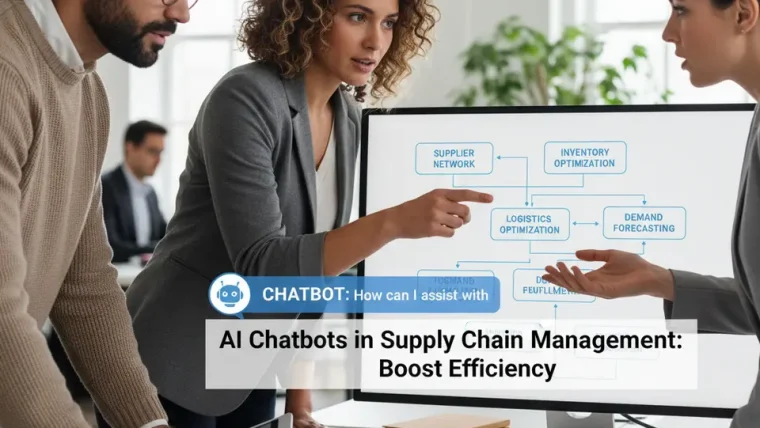



AI Chatbots in Supply Chain Management: Boost Efficiency
A/B Testing for Chatbots: Boost Engagement with Data
Smart Chatbots Revolutionizing Supply Chain Management
Supply Chain Chatbots: Streamlining Logistics with AI