
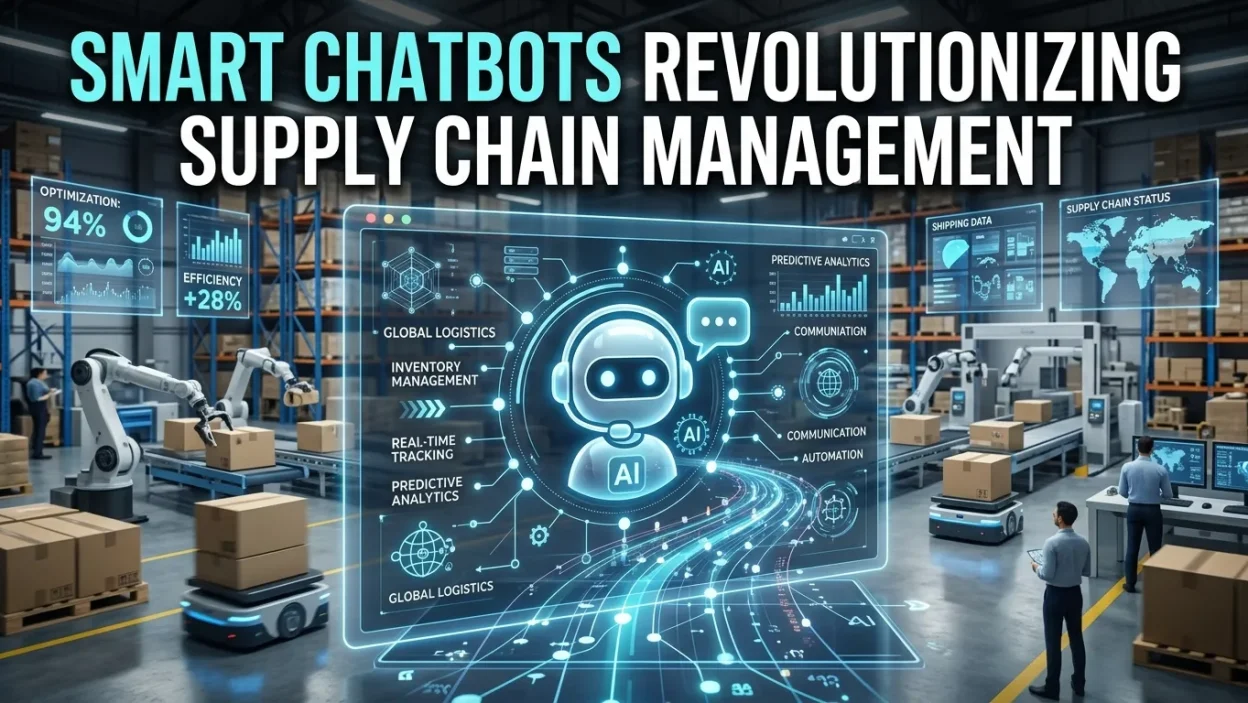
The integration of smart warehouse automation and intelligent conversational agents is rapidly transforming global logistics. Today, modern businesses rely heavily on smart chatbots to streamline complex operations, reduce costly errors, and enhance real-time visibility.
This comprehensive guide explores how AI-powered chatbots fundamentally improve supply chain management. We delve into their core benefits, practical use cases, and how they seamlessly integrate with smart warehouse automation systems. You will learn expert strategies, avoid common implementation pitfalls, and discover future trends shaping logistics.
The Evolution of Supply Chain Logistics
The logistics industry has always relied on precision, speed, and accuracy. For decades, supply chain managers tracked inventory and shipments using manual spreadsheets, legacy software systems, and isolated communication channels. While these methods worked in a slower-paced global economy, the rise of e-commerce and immediate consumer demands exposed significant inefficiencies.
Today, we are witnessing a fundamental shift from reactive supply chain management to proactive, data-driven ecosystems. This transformation is heavily driven by the adoption of artificial intelligence and advanced robotics. When logistics companies integrate predictive analytics with real-time communication tools, they create a highly responsive network capable of addressing disruptions before they occur. Central to this digital revolution is smart warehouse automation, a concept that encompasses autonomous robots, IoT sensors, and advanced software platforms working in perfect harmony.
The modern supply chain requires constant oversight. Facilities must manage thousands of SKUs, coordinate with global suppliers, and ensure last-mile delivery success. Intelligent chatbots serve as the digital bridge between human operators and complex machinery. By leveraging natural language processing, these virtual assistants allow managers to query databases, adjust workflows, and monitor operations using simple conversational commands.
How Smart Warehouse Automation Empowers Chatbots
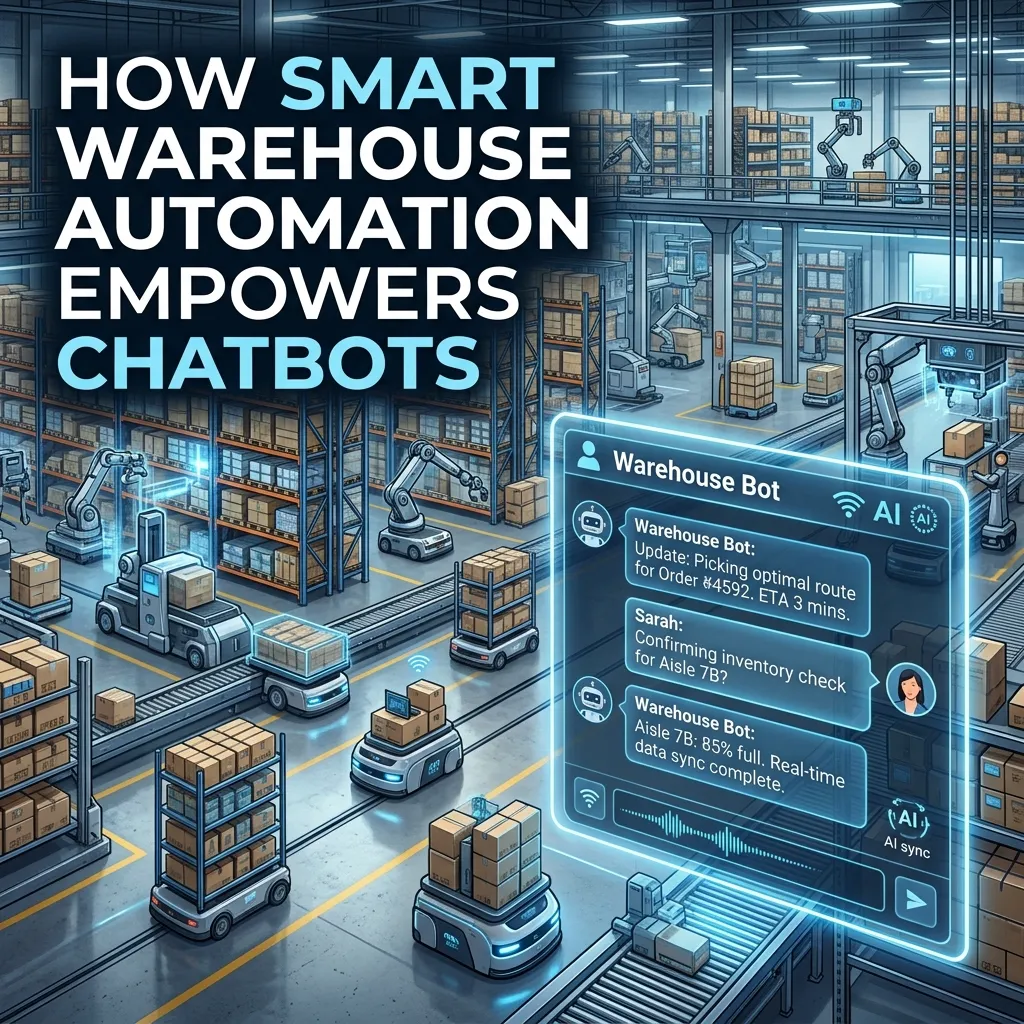
To truly understand the impact of conversational AI in logistics, we must look at the infrastructure that supports it. Smart warehouse automation provides the vital data foundation that chatbots need to function effectively. Without real-time data inputs from physical operations, a chatbot is simply a basic communication tool. However, when connected to a fully automated facility, it becomes a powerful operational command center.
Consider a facility equipped with IoT weight sensors, automated guided vehicles (AGVs), and automated storage and retrieval systems (AS/RS). These systems constantly generate vast amounts of data regarding stock levels, machine health, and order fulfillment speeds. Smart warehouse automation systems aggregate this data, but interpreting it quickly can be challenging for human workers.
Key Benefits of AI Chatbots in Logistics
The deployment of virtual assistants across the logistics sector offers a multitude of advantages that directly impact the bottom line. Let us explore the primary benefits of integrating these tools into your operational framework.
24/7 Operational Support
Unlike human workers, virtual assistants do not require breaks, sleep, or shift changes. They provide continuous, round-the-clock support for both internal operations and external customer inquiries. If a supplier on the other side of the world needs to update a delivery manifest at 3:00 AM local time, the chatbot can receive the information, update the smart warehouse automation system, and send a confirmation without any human intervention.
Enhanced Real-Time Visibility
Achieving end-to-end visibility is the holy grail of modern logistics. Chatbots facilitate this by serving as a unified interface for disparate tracking systems. Users can inquire about inventory forecasting or exact shipment locations and receive consolidated, accurate answers immediately. This level of transparency builds trust with clients and allows management to make highly informed decisions.
Cost Reduction and Resource Allocation
By automating routine inquiries and administrative tasks, logistics companies can significantly reduce labor costs. Customer service representatives no longer need to spend hours answering basic “Where is my order?” questions. Instead, human talent can be reallocated to handle complex problem-solving, relationship management, and strategic planning. The combination of reduced labor overhead and optimized smart warehouse automation leads to a rapid return on investment.
Real-World Applications and Use Cases

The theoretical benefits of conversational AI are impressive, but their practical applications are truly revolutionizing the industry. Here is how leading companies are currently utilizing this technology.
Supplier Coordination
Managing multiple suppliers across different time zones and languages is a massive logistical challenge. Chatbots act as universal translators and coordinators. They can automatically send out requests for quotations (RFQs), compile the responses into an easy-to-read format, and even rank suppliers based on price and historical reliability. Once a vendor is selected, the chatbot tracks the inbound freight, ensuring it syncs perfectly with the receiving dock’s smart warehouse automation schedule.
Fleet Management and Route Optimization
Logistics companies are integrating chatbots directly into their fleet management software. Drivers can use voice commands to interact with the bot, reporting traffic conditions, requesting route deviations, or confirming delivery drops. The chatbot analyzes this input alongside weather data and traffic patterns to optimize routes in real-time, saving fuel and reducing delivery times.
Traditional vs. Chatbot-Enhanced Supply Chains
To illustrate the stark contrast between traditional methods and AI-enhanced operations, consider the following comparison.
|
Feature |
Traditional Supply Chain |
Chatbot & Smart Warehouse Automation |
|---|---|---|
|
Data Retrieval |
Manual searches through complex ERP systems |
Instant conversational queries |
|
Response Time |
Hours to days, depending on staff availability |
Milliseconds, available 24/7 |
|
Error Rate |
High, prone to manual data entry mistakes |
Extremely low, relies on integrated APIs |
|
Predictive Capabilities |
Minimal, largely reactive to issues |
High, utilizes machine learning to forecast |
|
Scalability |
Requires proportional hiring of administrative staff |
Highly scalable with minimal additional cost |
|
Supplier Communication |
Email chains and delayed phone calls |
Automated, standardized, and instant |
Expert Insights on Supply Chain Modernization
Leading voices in the logistics sector agree that conversational AI is not just a passing trend, but a foundational element of future supply chains. Experts point out that the true power of these systems lies not in replacing human workers but in augmenting their capabilities.
According to industry analysts, the most successful logistics companies are those that treat chatbots as digital team members rather than simple software scripts. When a chatbot is integrated deeply into a smart warehouse automation ecosystem, it gains the context necessary to make intelligent recommendations. For instance, an expert supply chain analyst noted that advanced bots can now cross-reference global news feeds with shipping routes to warn managers of potential geopolitical disruptions days before they impact operations.
Common Mistakes to Avoid During Implementation
While the benefits are vast, deploying AI in logistics is not without its challenges. Companies frequently make critical errors that undermine the effectiveness of their new systems. By understanding these pitfalls, you can ensure a smoother digital transformation.
Operating in Data Silos
A chatbot is only as intelligent as the data it can access. One of the biggest mistakes companies make is failing to integrate the bot with all relevant systems. If your chatbot can access customer records but is entirely disconnected from your smart warehouse automation platform, it cannot provide accurate order statuses. Ensure comprehensive API integration across your ERP, CRM, and WMS platforms.
Neglecting Change Management
Introducing a new technology often causes friction among existing staff. If employees view the chatbot as a threat to their jobs rather than a tool to help them, adoption rates will plummet. Management must actively communicate the purpose of the technology, provide comprehensive training, and encourage feedback. Highlight how the bot will eliminate tedious paperwork and allow staff to focus on more engaging tasks.
Deploying Without a Clear Scope
Some organizations attempt to build a “super bot” that handles every conceivable task from day one. This overly ambitious approach usually results in a buggy, confusing user experience. It is far better to start with a narrowly defined scope—such as handling internal IT requests or basic order tracking—and gradually expand its capabilities as the system stabilizes and user trust grows.
The Future of Smart Chatbots in Logistics
The capabilities of virtual assistants will only expand as artificial intelligence continues to evolve. We are moving toward an era of hyper-automation, where chatbots will not only report data but actively manage physical assets.
In the near future, we expect to see deep integration between chatbots and augmented reality (AR) systems. A warehouse worker wearing smart glasses could ask a chatbot for the location of a specific item. The bot would communicate with the smart warehouse automation system and instantly project a glowing pathway onto the worker’s field of vision, guiding them directly to the correct bin.
Conclusion
The integration of intelligent virtual assistants and smart warehouse automation is fundamentally rewriting the rules of global logistics. By adopting these advanced technologies, companies can achieve unprecedented real-time visibility, drastically reduce operational costs, and build highly resilient supply networks. Embrace the future of logistics today and transform your supply chain into a proactive, data-driven powerhouse.
Frequently Asked Questions
1. What is the role of a chatbot in supply chain management?
A chatbot acts as an intelligent digital assistant that connects human users with complex logistics databases. It allows managers, employees, and customers to query inventory levels, track shipments, and automate routine procurement tasks using natural conversational language.
2. How does smart warehouse automation connect to conversational AI?
Smart warehouse automation systems generate massive amounts of real-time data from IoT sensors, robotics, and software. Chatbots connect to these systems via APIs, translating this complex data into easy-to-understand text or voice responses for users.
3. Can chatbots handle customer service for logistics companies?
Yes, chatbots are highly effective at managing customer service in logistics. They can instantly answer frequently asked questions, provide precise delivery updates, and process return requests 24/7 without human intervention.
4. Are these AI systems secure enough for sensitive supply chain data?
When implemented correctly, AI systems are highly secure. Companies must use encrypted connections, enforce strict role-based access controls, and ensure the chatbot complies with international data protection regulations to safeguard sensitive information.
5. Will AI chatbots replace human supply chain managers?
No, AI chatbots are designed to augment human workers, not replace them. By automating repetitive administrative tasks and data retrieval, chatbots free up human managers to focus on strategic planning, complex problem-solving, and relationship building.
6. What are the cost benefits of implementing this technology?
Implementing AI reduces labor costs associated with routine customer service and administrative data entry. Furthermore, by integrating with smart warehouse automation, companies reduce costly inventory errors, prevent stockouts, and optimize resource allocation.
7. How long does it take to deploy a logistics chatbot?
The deployment timeline varies based on complexity. A basic FAQ bot can be deployed in a few weeks, while a deeply integrated bot connected to a smart warehouse automation system and multiple ERPs may take several months to fully test and launch.
8. Can chatbots help with predictive analytics?
Yes, advanced chatbots leverage machine learning to analyze historical data and current trends. They can forecast inventory needs, predict potential supply chain bottlenecks, and alert managers to risks before they cause significant disruptions.
9. What happens if the chatbot cannot answer a user’s question?
Modern chatbots are programmed with seamless human handoff protocols. If a user asks a highly complex question or expresses frustration, the bot automatically routes the conversation, along with all chat history, to an appropriate human representative.
10. Do chatbots work with multiple languages and global suppliers?
Absolutely. One of the greatest advantages of conversational AI is its ability to instantly translate languages. This allows a central logistics hub to communicate seamlessly with suppliers and carriers across the globe in their native languages.


How to Improve Chatbot User Experience for Better Engagement
How AI Chatbots for eCommerce Help Businesses Increase Conversions
The Future of Generative AI Chatbots in Business Automation
How AI Chatbot Development Automates Business Communication